
Buying or Selling a Home in Bergen County? Your Questions Answered
Local answers from New Jersey Proper on comparing homes, planning a sale and understanding what you’ll pay at closing.
Questions from buyers
When a listing says 6,000 square feet, how much is above grade and how much is finished lower level?
Ask the listing agent for two numbers: finished square footage above grade and finished square footage below grade. Ask where each measurement came from. A home advertised as 6,000 finished square feet could have 4,000 above grade and 2,000 on the lower level. Get a measured floor plan with a breakdown by level before comparing its price per square foot with another home.
Even two townhouses with the same floor plan can have different figures in municipal records if the land slopes differently. Under Fannie Mae’s appraisal guidance, a level partly below grade is reported as below grade, even when it has windows and a door to the yard. Look at the daylight, ceiling height and outdoor access as well as the number. Fannie Mae’s measurement guidance
I’m comparing Alpine, Tenafly and Cresskill. What should I compare at the same budget?
Put the actual annual tax bill next to the asking price for each house. For context, New Jersey reported 2025 effective tax rates of 0.794% in Alpine, 2.014% in Cresskill and 2.086% in Tenafly. Those rates help compare towns. Use the individual tax bill to budget for a particular home. New Jersey’s 2025 tax-rate table. Compare 2026 property tax rates for all 70 Bergen County towns
In our experience, buyers often pay a premium for Alpine’s lower carrying costs, and the same budget can buy different homes in Tenafly and Cresskill. Compare recent sales with similar lots, locations and condition. Check whether each house uses public sewer or private septic. For a septic property, request maintenance records and budget for an inspection.
How do I look up the property taxes on a Bergen County home?
Start with the Property Record Search on the Bergen County Board of Taxation website. Search by municipality and street address, confirm the tax year, and check the separate land and improvement assessments. The municipal tax collector can confirm the bill for that parcel.
For a new build, the last bill may reflect vacant land or the previous house. Ask the municipal assessor whether the completed home has been assessed and whether to expect an added assessment.
What can I learn from a floor plan, walkthrough video and 3D tour before scheduling a showing?
Pick a routine and follow it through the house. Where would you carry groceries from the garage? Can someone get from the pool to a bathroom without crossing the living room? The floor plan shows the route, the walkthrough shows the transitions, and the 3D tour lets you revisit a turn or doorway at your own pace.
Our 3D tours also have a dollhouse view. If you’re thinking about adding a bathroom, rotate the model to see whether there’s a bathroom directly above or below the proposed spot. A plumber can then check the actual pipe locations and feasibility.
What closing costs should I budget for when buying a home in New Jersey?
Common items include lender and appraisal fees on financed purchases, title and settlement charges, attorney fees, recording fees, and prepaid interest, insurance or property taxes. The CFPB gives a general starting range of 2% to 5% of the purchase price, excluding the down payment. CFPB guidance on budgeting
For a luxury or cash purchase, get an itemized estimate for the specific property. If you’re financing, your Loan Estimate separates closing costs from total cash to close, which also accounts for items such as your down payment and deposit.
My offer was accepted. What does attorney review mean in New Jersey?
For a typical agent-prepared residential contract, the review period generally runs for three business days after delivery of the fully signed contract to both buyer and seller. During review, an attorney may disapprove the contract or propose changes. Send the signed contract to your attorney promptly and have them confirm the deadline and tell you when review has concluded. New Jersey’s homebuying guide
Questions from sellers
My Bergen County home didn’t sell. Should I lower the price before relisting?
First, look at where buyers lost interest. If people viewed the listing online but rarely booked a showing, compare your first photos, floor plan and asking price with the homes they could see instead. If they toured but didn’t make offers, review their feedback and the homes that went under contract.
At 18 Kent Road in Tenafly, the home had been on the market for 298 days. We relisted at the same asking price and it sold within 21 days for $3,001,000. The decision on your home should come from its competition and showing history. Selling with New Jersey Proper
How do you price a custom home when there are few recent comparable sales in town?
We start with the question a buyer will ask: “If I had this budget, what else would I go see?” We review the closest comparable local sales first. An older sale of a similar home, or a sale in a neighboring town that attracts the same buyers, can tell us more than a recent sale of a very different property.
Then we compare the lot, location, layout, construction quality and condition, and look at what else is available now. A costly custom feature carries more weight when buyers value it and have few other ways to get it. How appraisers select comparable sales
Which updates are worth making before photography, and which can I leave to the buyer?
Start by removing the extra chair that blocks a doorway, clearing kitchen counters and cleaning the spaces that will be photographed. A fresh coat of paint in a scuffed entry or hallway can make sense. A functioning kitchen with a distinctive finish is a good place to pause before spending on someone else’s taste.
We walk the house with sellers before recommending projects. Seeing the sightlines in person helps us distinguish what the camera will pick up from what a buyer may want to change later. Our home marketing plan
How do you show buyers a feature that’s hard to understand in photos, like a walkout lower level?
We film the whole route: down the stairs, through the lower level and out to the yard. A buyer can see exactly where the grade changes, how much daylight reaches the room and whether someone coming in from the pool can get straight to a bathroom.
For features you can’t see, such as radiant floor heating or acoustic insulation, we verify the detail with the seller and label it on screen while showing the relevant room. Buyers watching with the sound off still get the information.
Who pays the NJ mansion tax, and how much is it?
On qualifying New Jersey transfers over $1 million, the seller pays the Graduated Percent Fee, commonly called the mansion tax. The applicable rate applies to the full sale price. For example, on a qualifying $3 million sale, the fee is $75,000. See the NJ mansion tax brackets and calculator.
How do I estimate New Jersey’s standard Realty Transfer Fee when I sell?
Ask for two separate lines on your seller net sheet: the standard Realty Transfer Fee and any Graduated Percent Fee. The standard fee uses a sliding schedule per $500 of consideration, and exemptions can change the amount.
On a qualifying $3 million sale with no exemptions, the standard fee is $33,775. Add the $75,000 graduated fee for a total of $108,775 before other closing costs. Have your closing professional confirm the figures for your deed. New Jersey Realty Transfer Fee FAQs
When is the best time to list my Bergen County home?
Work backward from your moving date and look at what buyers can choose today. If yours would be the only move-in-ready home with a main-level primary suite in the towns and price range your buyers are searching, that may matter more than the month on the calendar.
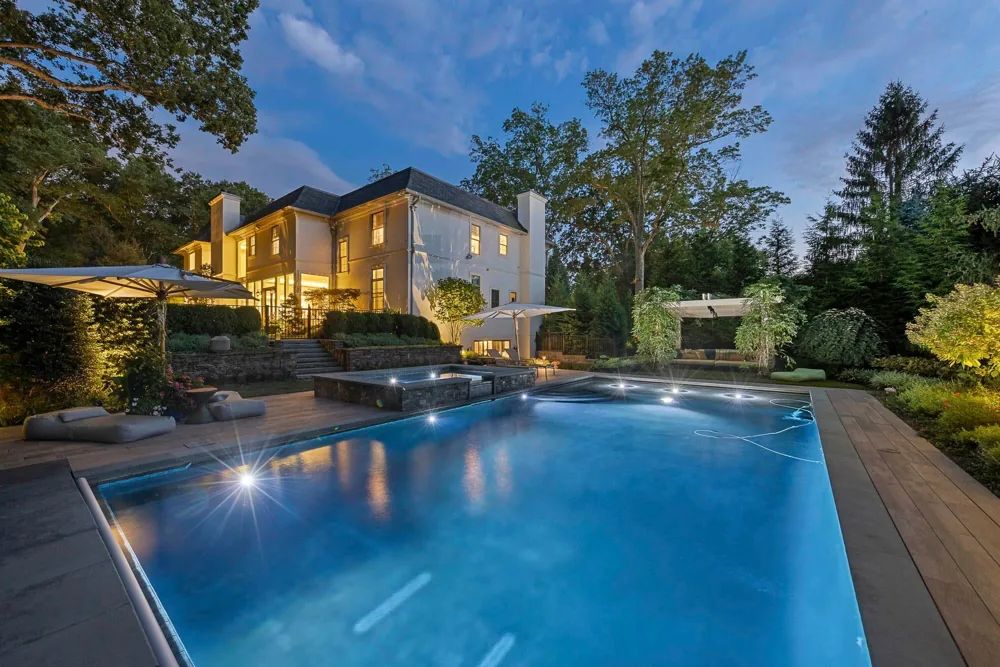
Photography and launch can happen at different times. If the pool or gardens are a major feature, photograph them in season and use those images when your listing goes live.