


Area Highlights
A quick view of the most influential metrics in Norwood.
Norwood, NJ Market Snapshot (NJMLS)
Annual market stats for Norwood from the NJMLS Statistics Report (all property types, Jan 1–Dec 31).
Town-level markets can vary year to year, so we show the latest year plus multi-year context.
Full Year 2025 (Jan 1–Dec 31)
|
Homes Sold
57
|
Average Sale Price
$1,027,093
|
Average Days on Market
57
|
Sale-to-Original-List (Sale/OLP)
100.60%
|
|
Success Ratio
54.8%
Sold ÷ (Sold + Withdrawn + Expired)
|
3-Year Avg Sale Price (2023–2025)
~$936K
|
3-Year Avg DOM (2023–2025)
~48
|
3-Year Avg Sale/OLP (2023–2025)
~99.83%
|
Noteworthy 10-Year Trends (2016–2025)
- Higher price level: average sale price increased from $637K (2016) to $1.027M (2025), about a 61% rise over the decade.
- Faster market: avg DOM improved from 101 days (2016) to 57 days (2025), with the decade low at 33 days (2022).
- Stronger pricing outcomes: Sale/OLP moved from the low-to-mid 90% range (2016–2020) to ~99–101% in 2021–2025.
Market Insight
Norwood’s annual averages can swing because inventory mix changes year to year. Sale/OLP reflects how close
successful listings trade to their original asking price, while the success ratio (Sold ÷ [Sold + Withdrawn + Expired])
reflects how many listings convert to a closing. It’s common to see strong sale-to-list results in years where
well-positioned homes sell competitively, while the success ratio moves based on withdrawals and expirations.
Norwood NJMLS Annual Summary (2016–2025)
| Year | Homes Sold | Avg Sale Price | Avg DOM | Sale/OLP | Success Ratio |
|---|---|---|---|---|---|
| 2025 | 57 | $1,027,093 | 57 | 100.60% | 54.8% |
| 2024 | 43 | $943,120 | 38 | 100.57% | 51.8% |
| 2023 | 55 | $838,585 | 50 | 98.32% | 50.0% |
| 2022 | 86 | $809,758 | 33 | 99.15% | 70.5% |
| 2021 | 90 | $759,993 | 55 | 98.85% | 73.2% |
| 2020 | 88 | $636,727 | 63 | 96.12% | 48.6% |
| 2019 | 83 | $613,358 | 78 | 92.95% | 45.1% |
| 2018 | 71 | $646,180 | 87 | 93.20% | 43.0% |
| 2017 | 72 | $625,524 | 100 | 94.30% | 38.5% |
| 2016 | 72 | $636,597 | 101 | 93.67% | 38.6% |
Source: NJMLS Statistics Report — Norwood (0241), all property types/subtypes, Jan 1–Dec 31 each year.
Top 10 Most Expensive Single-Family Home Sales in Norwood, NJ (2000–2025)
Closed residential single-family sales in Norwood from 01/01/2000 through 12/31/2025,
ranked by sold price. Fields shown include address, MLS-recorded style, beds/baths, days on market, sold date, sold price,
and buyer origin (city/state).
| Rank | Address | Style | BR | FB | HB | DOM | Sold Date | Sold Price | Buyer City | Buyer State |
|---|---|---|---|---|---|---|---|---|---|---|
| 1 | 79 Sherwood Road | Contemp | 5 | 6 | 1 | 207 | $3,300,000 | c/o sb | NJ | |
| 2 | 64 Sherwood Road | Colonial | 6 | 6 | 2 | 2 | $2,825,000 | Demarest | NJ | |
| 3 | 290 Westwind Court | Colonial | 7 | 6 | 2 | 27 | $2,500,000 | Haworth | NJ | |
| 4 | 399 High Street | Colonial | 6 | 5 | 0 | 68 | $2,358,000 | Ridgewood | NJ | |
| 5 | 140 Rio Vista Drive | Colonial | 5 | 5 | 2 | 295 | $2,300,000 | Cliffside Park | NJ | |
| 6 | 11A Meadow Lane | Contemp | 5 | 7 | 1 | 77 | $2,250,000 | Edgewater | NJ | |
| 7 | 88 Sherwood Road | Colonial | 5 | 5 | 1 | 70 | $2,235,000 | New York | NY | |
| 8 | 59 Sherwood Road | Colonial | 5 | 4 | 2 | 76 | $2,090,000 | Closter | NJ | |
| 9 | 20 Briarwood Avenue | Colonial | 5 | 6 | 1 | 17 | $2,050,000 | Norwood | NJ | |
| 10 | 120 Briarwood Avenue | Colonial | 6 | 6 | 0 | 184 | $2,050,000 | River Vale | NJ |
Source: closed residential single-family sales from 01/01/2000–12/31/2025. Public display excludes MLS identifiers.
“Style” reflects the MLS-recorded property style; buyer origin reflects the buyer mailing city/state as recorded and may not represent current residence.
How to use this table
- Compare Norwood’s price ceiling across the last 25 years.
- See which home profiles reach the highest sold prices (style, beds/baths, time on market).
- Spot buyer-origin patterns (city/state) at the top end.
Living in Norwood: schools, nearby rail, parks, downtown access, housing types, municipal systems and parcel-level due diligence
A buyer-focused guide to Norwood’s local Pre-K–8 district and Northern Valley at Old Tappan pathway, nearby Pascack Valley Line stations, the Broadway and Summit Street corridors, Kennedy Field and municipal recreation, established and newer homes, sanitary sewer and stormwater systems, permits, resale or rental compliance, drainage and address-specific ownership decisions.
A compact northern Bergen County borough where the exact road, school route, parcel systems and nearby commercial centers shape daily life
Norwood combines detached residential neighborhoods, a municipal and recreation hub on Broadway, the school and library on Summit Street, local businesses and direct connections toward Old Tappan, Northvale, Closter, Harrington Park and regional transportation. It is not organized around an active passenger-rail station, so address-specific route testing is central to a purchase decision.
Broadway civic, recreation and local-business corridor
Borough Hall and Kennedy Field sit along Broadway, creating a recognizable municipal and recreation center. Local businesses, intersections and residential streets connect to the same corridor.
A nearby property can gain convenient access while also experiencing municipal activity, sports traffic, event parking, road noise or temporary closures.
Visit: weekday morning, afternoon activity, weekend event and evening conditions.
Summit Street school and library corridor
Norwood Public School and the Norwood Public Library are both located on Summit Street, making this a practical civic and family-services corridor.
Proximity does not eliminate arrival, dismissal, bus, visitor, library-program or evening-activity traffic.
Test: the exact school-day and after-hours route from the driveway.
Kennedy Field and the Borough Hall area
Kennedy Field is used for municipal recreation, school athletics and community activities. Current Borough and school information reference fields, courts, a playground and changing recreation uses in this area.
Field schedules, lighting, parking and permitted uses change by season and program.
Check: current field calendar, parking pattern, evening use and the view or sound from the property.
Tappan Road and northern-valley connections
Tappan Road links Norwood with neighboring communities and daily destinations to the west and north. It can be useful for school, shopping, commuter-coach and regional driving strategies.
Convenience depends on the property’s side streets, turn options, peak traffic, school periods and construction conditions.
Drive: both directions during the household’s real departure and return windows.
Established residential streets with varied housing eras
Norwood’s residential inventory reflects several development periods, from older homes and postwar forms to expanded properties and newer custom construction. Street width, setbacks, lot shape and topography vary.
A similar exterior style can conceal different foundations, utilities, drainage systems, permits and renovation histories.
Compare: legal use, systems, site performance and records—not only presentation.
Wooded land, brooks, ponds and drainage features
Norwood’s name and municipal history are associated with its earlier wooded landscape, while current stormwater and floodplain regulations reflect the importance of water movement and site conditions.
A landscaped yard, nearby pond or dry showing day does not establish flood status or drainage performance.
Review: flood maps, elevations, wetlands, swales, sump discharge, prior water entry and engineering records.
Local convenience supported by nearby commercial centers
Norwood has local businesses and a compact community center, while households also use Northvale, Closter, Old Tappan, Westwood and other nearby areas for broader shopping, dining, medical and professional services.
The best daily pattern depends on direction of travel and the property’s position within the borough.
Map: grocery, pharmacy, medical, fitness, childcare, dining and station combinations.
The exact-address comparison
Norwood should be evaluated property by property. School traffic, roadway exposure, lot dimensions, zoning, legal improvements, sewer and water connections, drainage, trees and future-work feasibility can change within a short distance.
The strongest comparison combines municipal records, a current survey, inspections and live route testing.
Decision file: assemble the survey, permits, utility confirmations, commute tests and ownership-cost estimate.
Location labels: Broadway, Summit Street, Kennedy Field and nearby-town references are practical orientation points, not legal neighborhood boundaries. Use the exact street address, block, lot and zoning district for permits, utilities, flood, school, title and future-work research.
Detached-home appeal comes with meaningful differences in legal space, site conditions, utility connections and long-term capital needs
Norwood inventory includes established Colonials, ranches and split-levels, renovated homes, substantial additions and newer construction. Lot size and interior finish are only the beginning; a buyer should reconcile the physical property with approved plans, survey conditions, sewer and water arrangements, drainage, accessory improvements and operating cost.
Established Colonials and custom traditional homes
Detached Colonials and custom traditional residences appear across several development periods. Floor plan, bedroom distribution, ceiling height, garage access and renovation scope vary materially.
An architectural label does not establish approved square footage, structural condition or system age.
Compare: main-level function, stairs, bedroom placement, basement, garage and outdoor circulation.
Ranches, split-levels, Cape forms and older houses
Ranches, split-levels, Cape-influenced homes and earlier residences may offer single-level living, renovation potential or established streetscapes. They can also contain older electrical, plumbing, insulation, chimney, tank or drainage conditions.
A remodeled interior does not prove that concealed systems or prior alterations were permitted.
Inspect: structure, roof, masonry, service capacity, mechanicals, sewer lateral and environmental conditions.
Expanded and substantially renovated properties
Many homes have been enlarged or reconfigured over time. Additions can change structure, roof drainage, bedroom count, egress, heating zones, impervious coverage and the relationship between the house and yard.
Marketing descriptions should be reconciled with approved plans, inspections and certificates.
Request: permit jacket, plans, final approvals, contractor information and warranties.
New construction and recent custom homes
Newer construction can provide current layouts, higher ceilings, larger kitchens, energy improvements and integrated systems. Buyers should distinguish fully completed new construction from a major renovation or phased rebuild.
Final certificates, grading completion, drainage performance, warranties and punch-list obligations require separate review.
Verify: final survey, certificates, engineering signoffs, warranty terms and unresolved site work.
Larger lots, privacy and estate-style amenities
Some properties provide substantial yards, mature landscaping, gates, pools, outdoor kitchens, generators, sheds or other accessory improvements. These features add legal, physical, maintenance and insurance questions.
Headline acreage does not establish usable or buildable area.
Model: setbacks, easements, coverage, drainage, trees, equipment access and annual maintenance.
Finished basements and lower-level rooms
Lower levels may include recreation, office, gym, guest or utility areas. Buyers should confirm approved use, ceiling height, emergency egress, moisture history, sewer-backup protection and whether the space is included in legal living area.
A finished appearance does not establish a lawful bedroom, bathroom or separate dwelling unit.
Reconcile: permits, plans, tax record, floor plan, inspection and seller disclosures.
Pools, patios, courts, decks and outdoor structures
Outdoor improvements can materially change how a property functions. They can also affect setbacks, lot coverage, barriers, drainage, grading, electrical and gas work, tree removal and insurance.
Equipment age and seasonal condition should be inspected independently from the house.
Verify: zoning, permits, final inspections, barriers, equipment, drainage and winterization.
Sanitary sewer, water and private service components
Norwood has municipal sanitary-sewer regulation, but the private lateral, cleanouts, pumps where present and connection history remain property-specific. Water provider, meter, service line and shutoff responsibility should also be confirmed for the exact address.
Public infrastructure does not guarantee the condition or capacity of private components.
Investigate: utility records, sewer scope, service materials, backups, repairs and planned work.
Carrying cost and property management
Large homes and grounds can require significant spending on heating and cooling, roofing, drainage, trees, landscaping, snow, pools, generators, irrigation, exterior finishes and sewer or water repairs.
Taxes alone do not describe the complete ownership cost.
Build: a five-year operating and capital plan using bills, service records, equipment ages and quotes.
Future-work flexibility is parcel-specific
A planned addition, pool, accessory structure, expanded driveway or major landscape project depends on zoning, survey dimensions, coverage, grading, drainage, trees, utilities and required approvals.
Concept drawings and neighboring improvements are not approvals for the property.
Prepare: a written feasibility review tied to the current survey and intended scope.
Separate visual appeal from legal and physical utility
- Legal bedroom and bathroom count
- Approved finished square footage
- Current survey and title rights
- Zoning and building envelope
- Sewer lateral and water service
- Drainage and grading performance
- Permit and inspection history
- Pool and accessory approvals
- Mechanical and generator age
- Roof, masonry and exterior envelope
- Landscape and tree obligations
- Insurance and annual operating cost
A local Pre-K–8 district followed by Northern Valley Regional High School at Old Tappan
Norwood Public School serves the local district from one Summit Street campus, with the website organizing information for Pre-K–4 and grades 5–8. The current high-school pathway continues to Northern Valley at Old Tappan. Registration, preschool access, programs, transportation and calendars remain district-controlled and should be confirmed for the intended year.
Norwood Public School District, Pre-K through grade 8
The district identifies itself as serving Norwood students from Pre-K through eighth grade. The school is located at 177 Summit Street.
A single-campus structure simplifies the town-level location reference but does not eliminate grade-specific schedules, entrances, transportation or activity logistics.
Pre-K–4 and grades 5–8 organization
The district publishes separate event calendars and administration references for Pre-K through grade 4 and grades 5 through 8. Families should use the correct grade-band materials for the applicable school year.
Arrival, dismissal, activities and parent communication may differ by grade.
Check: current calendar, handbook, entrance, transportation and daily schedule.
Preschool registration is year-specific
The district publishes annual preschool registration notices. Format, eligibility, capacity, schedule, documentation and any selection process can change.
A Norwood address does not by itself guarantee a particular preschool seat or program.
Verify: age criteria, residency, application timing, program format and notification procedure.
Kindergarten and new-student registration
The district publishes an online preregistration process and an annual document checklist. Age cutoffs, health forms and deadlines are tied to the intended school year.
Closing timing can affect when residency documentation is available.
Plan: registration documents and district contact before the intended start date.
Residency and student documentation
Current district guidance calls for multiple proofs of residency along with age, health and other student records. Requirements differ for owners, tenants, custody situations and affidavit students.
A contract or listing description is not a substitute for district residency review.
Confirm: the complete current checklist directly with the district.
Before-care, after-care and household logistics
The district website includes a Norwood Public School before-care and after-care program among parent resources. Capacity, grades, dates, hours, fees and registration procedures can change.
Care arrangements should be coordinated with bus, recreation and activity schedules.
Verify: availability and the complete pickup routine for the intended year.
Athletics and activities for older grades
The district currently publishes interscholastic opportunities for grades 5–8, including several team sports. Seasons, eligibility, transportation, venues and participation requirements change.
Some contests or programs can use Kennedy Field, the school campus or facilities in neighboring towns.
Map: practice, game, pickup and weekend schedules—not only the school commute.
Health, special services and grade-specific programs
Health forms, student support, special services, advancement criteria, curriculum and extracurricular offerings are administered by the district. Eligibility and placement are not permanent real-estate attributes.
Families should use current district contacts and written policies for individual questions.
Use: official district guidance rather than listing copy or prior-year assumptions.
Northern Valley Regional High School at Old Tappan
Norwood’s current public-school pathway continues to Northern Valley Regional High School at Old Tappan for grades 9 through 12. The regional district controls registration, curriculum, calendar, activities, athletics and transportation information.
The high-school route should be tested separately from the Summit Street campus trip.
Confirm: current registration and transportation for the student’s entry year.
School traffic and the complete daily route
A property close to school may still experience arrival, dismissal, buses, walkers, bicycles, after-care, sports and evening events. A property farther away may have a simpler driving pattern depending on its approach.
Test the routine from the exact driveway during the actual periods that matter.
Observe: morning, dismissal and evening-activity conditions before deciding.
Complete the enrollment and routine check before relying on property marketing
The town-level pathway is clear, but registration, programs, placement, care, transportation and calendars remain controlled by the responsible districts.
- 01
Confirm the current pathwayNorwood Public School through grade 8 and NVOT for the intended entry year.
- 02
Review registration documentsResidency, identity, custody, health, prior-school and program records.
- 03
Test both campus routesSummit Street, NVOT, activities, care and return logistics.
- 04
Use current district sourcesDo not rely on rankings, prior-year calendars or seller assumptions.
Nearby rail and regional roads require an address-specific station and route strategy
Norwood does not have an active NJ TRANSIT passenger-rail station. Buyers commonly compare Westwood, Hillsdale, Park Ridge and Montvale on the Pascack Valley Line, along with live commuter-coach options and driving routes. Parking eligibility, train patterns, bus stops and road conditions change, so the entire trip should be tested.
No active passenger-rail station in Norwood
Norwood is not a rail-station town. The practical commute begins with a drive or drop-off to a nearby station, a bus or coach stop, or a direct road route.
The best option can differ by address, parking access, destination, departure time and late return.
Compare: at least two stations and one backup route.
Westwood Station
Westwood Station provides Pascack Valley Line service in a larger downtown setting with municipal and station-area parking arrangements. It can pair rail with dining, errands or services.
Parking rules, permit eligibility, daily spaces and train patterns should be checked live.
Hillsdale Station
Hillsdale Station is another Pascack Valley Line option with a different local-road approach and downtown parking pattern. Its usefulness depends on the property and the traveler’s schedule.
A shorter map distance does not necessarily produce the shortest complete trip.
Park Ridge Station
Park Ridge Station provides another northern Pascack Valley Line comparison. It may be useful for some Norwood addresses depending on road direction, parking and train selection.
Resident, nonresident, permit and daily parking conditions can change.
Montvale Station
Montvale Station is the northernmost of the common New Jersey comparisons in this guide. Its local access, parking arrangement and train pattern differ from Westwood, Hillsdale and Park Ridge.
Confirm current lot rules and the full evening return before relying on it.
Pascack Valley Line service patterns and transfers
Pascack Valley Line trips may involve Hoboken, Secaucus Junction and onward connections depending on the train and destination. Not every departure has the same express pattern, transfer or late-evening return.
Weekend, holiday and disruption schedules require separate review.
Use: a current trip planner for the actual day and time.
Private commuter-coach and bus options
Private commuter-coach service may use Norwood or nearby northern-valley stops, but operators, routes, boarding sides, parking, tickets and schedules can change.
Historic route references should not be used as the basis for a purchase decision.
Confirm: the current operator, exact stop, last return and service-alert channel.
Driving corridors and the complete commute model
Broadway, Tappan Road, Livingston Street and neighboring-town roads connect Norwood toward Closter, Northvale, Old Tappan, Route 9W, the Palisades Interstate Parkway and New York crossings. The practical route varies by address and direction.
School traffic, weather, incidents, bridge work and peak-hour queues can materially change a short route.
Model: best case, ordinary case and disrupted case from the driveway.
Local businesses and civic services are supplemented by several nearby shopping and dining centers
Norwood offers local services and a compact community center rather than a large rail-oriented downtown. Buyers should map the household’s actual relationship to Northvale, Closter, Old Tappan, Westwood and other northern Bergen destinations while separating everyday needs from occasional dining or shopping.
Local Broadway and Tappan Road services
Norwood’s local businesses and municipal services are distributed around Broadway, Tappan Road and connecting streets. Convenience can vary by the direction of travel and the property’s side-street access.
Business ownership, hours, parking and concepts change over time.
Test: routine stops during weekday and weekend periods.
Closter commercial center
Closter provides a nearby concentration of groceries, dining, fitness, medical and specialty services. The route is different from the one used for Northvale or Westwood.
A destination can be geographically close but less convenient during school or peak shopping periods.
Compare: travel, parking and evening return from the exact property.
Northvale and the northern local-service pattern
Northvale adds nearby restaurants, retail and services and may pair naturally with Tappan Road or northern travel. It can also be relevant to youth sports, school activities and commuter-coach planning.
Turn direction and time of day affect practical convenience.
Map: grocery, pharmacy, fuel or charging, childcare and recurring appointments.
Old Tappan and neighboring-town amenities
Old Tappan provides additional local dining, recreation and school-related destinations, including the NVOT high-school route. Norwood households may use several adjacent communities rather than one single downtown.
The strongest location analysis uses actual weekly destinations.
Include: high-school, activities, errands and evening pickup in the route model.
Westwood for a broader downtown and rail combination
Westwood can combine Pascack Valley Line access with a larger downtown, restaurants, medical services and retail. It may work as both a commuter and errand destination.
Parking demand and return traffic differ from a station-only trip.
Test: station morning, dinner period and late return separately.
Norwood Public Library and BCCLS access
The Norwood Public Library at 198 Summit Street provides collections, digital resources, programs and access to the BCCLS network subject to current eligibility, hours and policies.
Programs and room use follow their own calendars and registration rules.
Healthcare, childcare and professional services
A complete location review should include primary care, urgent care, hospital preference, dental and specialist appointments, childcare, houses of worship, pet care and professional offices.
These destinations may point a household toward different sides of Norwood.
Build: a shared map using actual providers and recurring commitments.
Delivery, maintenance and property-service access
Detached homes rely on waste pickup, package delivery, landscapers, snow service, contractors, pool or generator technicians and utility access. Narrow drives, gates, slopes and turnaround space can affect service.
Daily convenience includes how the property works for maintenance and emergencies.
Observe: mail, waste, contractor, emergency and winter-access conditions.
Map errands and service access, not only restaurants
Norwood’s location is best evaluated through the household’s complete weekly pattern from each finalist property.
- A
Everyday essentialsGrocery, pharmacy, fuel or charging, coffee, fitness and childcare.
- B
Commuter combinationStation or coach stop, parking, errands, evening pickup and return route.
- C
Property servicesLandscaping, snow, pool, generator, sewer and delivery access.
- D
Business verificationCurrent operator, hours, accessibility, reservation and parking conditions.
Kennedy Field, municipal courts, youth programs and changing seasonal recreation
Norwood Recreation coordinates programs, field use and community activities. Kennedy Field is a central municipal recreation location, while school facilities, community spaces and nearby regional parks expand the household’s options. Current schedules, eligibility, reservations and rules should control.
Kennedy Field recreation hub
Kennedy Field, adjacent to the Borough Hall area on Broadway, is used for municipal recreation, school athletics and community events. Its exact field configuration and program schedule can change.
Nearby buyers should consider both convenient access and event traffic, sound or parking.
Playground, basketball, pickleball and pond-area improvements
Current Borough communications reference a playground, basketball and pickleball courts and a pond area around the Kennedy Field complex. Availability, hours and operating rules should be checked through the Borough.
Facility improvements can alter circulation, parking and seasonal use.
Confirm: current completion, access, reservations and lighting.
Baseball, softball, soccer and field sports
Municipal and school programs use fields for changing youth and community sports. Eligibility, registration, team structure, practice location and game schedule vary by season.
Some activities may use facilities outside Norwood.
Plan: practice nights, pickup, tournaments and field closures.
Court sports and changing resident programs
Basketball, pickleball and other court programs can be offered through Recreation or community organizations. Open play, lessons, leagues and reservations may follow different rules.
Do not assume a prior-year schedule or unrestricted court access.
Check: residency, registration, hours, equipment and court rules.
Summer recreation
The Borough publishes seasonal summer recreation information for Norwood residents. Dates, ages, locations, capacity, fees and staffing procedures are established for each edition.
Program availability should not be treated as a permanent property feature.
Field, community-center and facility use
The Borough provides applications and documents for field or facility use. Organized use can require approval, insurance, scheduling and compliance with current rules.
A field appearing open does not guarantee private or team access.
Verify: permit, fee, insurance, priority, hours and cancellation policy.
Community garden and environmental programs
Borough communications and the Environmental Commission reference community and environmental activity, including garden-related opportunities and educational programs. Participation, plots and events change.
Use the current Borough calendar and commission information before planning.
Nearby regional outdoor options
Norwood’s position near Closter, Alpine and the Palisades expands access to county and regional parks, trails and outdoor destinations. Travel, parking, seasonal closures and permitted uses differ by facility.
A scenic road or wooded edge is not automatically a safe pedestrian or bicycle route.
Evaluate: sidewalks, shoulders, crossings, grade, lighting and current park rules.
Recurring Borough, recreation, school, library and community programs with changing dates
Norwood has a changing calendar rather than one static annual list. Use Borough news, Recreation, school and library sources for the intended event, registration, parking, weather and road information.
Norwood Day
The Borough maintains a dedicated Norwood Day information area and publishes event details through current municipal channels. Date, location, vendors, activities, parking and weather procedures are set for each edition.
Nearby properties can experience temporary traffic and activity changes.
Sports opening days, games and seasonal ceremonies
Recreation and school athletics can include opening-day activities, games, tournaments and recognition events at Kennedy Field or other facilities. Schedules vary by sport and season.
Field use can affect parking, sound and local traffic.
Public Works and community-service events
Borough calendars may include equipment demonstrations, cleanup activities, recycling information or public-works events. Examples and dates change and should be verified live.
Some events can temporarily affect municipal parking or facility access.
Library programs
The Norwood Public Library publishes changing programs for children, teens and adults, along with BCCLS and digital resources. Registration, age limits, cardholder rules and room availability differ by program.
Check current hours and the event calendar before planning a visit.
School, PTO and student events
Norwood Public School publishes grade-band calendars, board information and changing school-community programs. Performances, meetings, athletics and family events can affect household logistics.
Use the intended school-year calendar rather than an older listing or social post.
Environmental and garden activities
The Environmental Commission and other Borough groups can sponsor educational, cleanup, garden or sustainability activities. Topic, eligibility, capacity and location can change.
Current municipal notices should control.
Senior and community-center programs
Borough boards and community organizations may offer senior, cultural, social or civic programming. Membership, residency, schedules, transportation and fees are controlled by each organizer.
A program listed in one year is not guaranteed to repeat.
Use live calendars before every event
Municipal, school, library, recreation and organization calendars are separate. Events can move, fill, require registration, change parking or be canceled for weather.
Nearby residents should also review field, road and construction notices.
Check: the official organizer page and day-of notice.
Use the department that controls the property record, permit, utility, health, recreation or closing question
Norwood records and services are distributed among the Borough Clerk, Construction and Code Enforcement, Planning and Zoning, Public Works, Health, Tax, Recreation, public safety, the school district and the library. Property research is more reliable when requested by exact address, block and lot.
Norwood Public Library
The library at 198 Summit Street provides borrowing, digital resources, programs and BCCLS access subject to current eligibility, hours and policies.
Borough Hall and Clerk
Borough Hall at 455 Broadway connects residents with administration, public records, licenses, notices, agendas and municipal contacts.
Construction and Code Enforcement
Construction and Code Enforcement handles permit, inspection, code and property-compliance matters. Current forms and submission requirements should be confirmed before work or closing.
Planning, zoning and zoning map
Planning and zoning resources address land-use applications, variances, zoning districts and project review. A current survey is central to property analysis.
Public Works and sanitation
Public Works supports roads, drainage, municipal grounds, snow and other operations, while the Borough publishes current sanitation and recycling information.
Health Department
The Health Department addresses public-health and property-related matters within its authority. Inspection and transaction questions should be directed to the current office.
Recreation and field use
Recreation publishes programs, documents and facility-use information. Eligibility, reservations, insurance, dates and fees vary.
Police, fire and emergency information
Use official municipal public-safety channels for emergency contacts, traffic, road closures and current preparedness information.
Tax, assessor and property records
The Tax Assessor, Finance and Tax, Clerk, Construction, Zoning and other departments hold different parts of a property record. Request information using the exact block, lot and address.
Value depends on legal use, survey conditions, private utility components, drainage performance and future flexibility
A Norwood buyer should assemble a parcel-specific record before assigning value to finished space, lot size, a pool, newer construction or expansion potential. The most important questions often involve zoning, permits, sewer and water service, stormwater, floodplain status, grading, trees, resale or rental compliance and long-term cost.
Zoning district and bulk standards
Do not apply one universal lot-size, setback, coverage, height or accessory-use rule to every Norwood property. The current zone and code control.
Existing improvements may be conforming, legally nonconforming, approved by variance or unsupported by a clear record.
Obtain: zoning map, applicable code, current survey and prior land-use decisions.
Survey, deed, title rights and boundaries
A current scaled survey should identify boundaries, improvements, encroachments, easements, rights of way, walls, fences, pools, accessory structures and visible drainage features. Title review addresses recorded rights and restrictions.
Tax maps and online aerials are not boundary surveys.
Compare: survey, deed, title commitment, tax map and physical occupation.
Permit, inspection and certificate history
Request records for additions, finished basements, bedrooms, bathrooms, decks, pools, generators, retaining walls, sheds and other work. Identify open permits, failed inspections, violations or work without a clear approval trail.
A listing description does not legalize an improvement.
Reconcile: records with the house, survey, floor plan, tax record and disclosures.
Residential resale and continued-occupancy requirements
Norwood’s code and current forms should be reviewed for any inspection, certificate or application required for a residential sale or change in occupancy. Requirements and lead times can change.
Responsibility should be allocated early among seller, buyer, attorneys and agents.
Confirm: current application, inspection scope, open-item treatment and closing timing.
Rental registration and inspection if applicable
Rental property can be subject to registration, inspection, occupancy, property-maintenance and renewal requirements. Existing leases and tenancy obligations require separate legal review.
Owner occupancy or a prior practice does not establish an exemption.
Review: current code, registration, inspections, leases, deposits and rent-related obligations.
Sanitary sewer and private lateral condition
Norwood regulates sanitary sewer use, while the private lateral and property-side components remain the owner’s concern unless records establish otherwise. Age, roots, settlement, blockages and improper connections can affect performance.
A public sewer connection does not guarantee a sound private line.
Consider: records, cleanout location, sewer scope, repairs, backups and replacement route.
Water utility, meter and service line
Confirm the current water utility, account, meter, service material, shutoff, pressure and responsibility for the exact property. Neighboring homes can have different service histories or replacement work.
Use official utility and state water-system sources rather than assumption.
Verify: provider, material inventory, repairs, quality notices and planned work.
Stormwater, floodplain, wetlands and drainage
Review FEMA and local information, site elevations, prior water entry, grading, swales, catch basins, seepage systems, wetlands, brooks, retaining conditions and downstream flow. Norwood has current stormwater and floodplain regulations.
A dry inspection day does not establish major-storm performance.
Request: engineering plans, repair history, insurance information and seller documentation.
Sump pumps and prohibited sewer discharge
Norwood’s code addresses improper discharge of clean water into the sanitary-sewer system. Buyers should identify where sump pumps, footing drains, roof leaders and other drainage components discharge.
An unseen or buried outlet should be traced before closing.
Inspect: pumps, backup power, discharge points, grading and winter operation.
Soil movement, grading, retaining walls and driveway
Major grading, fill, excavation, retaining work or driveway changes can require engineering and land-use review. Existing slopes and walls should be evaluated for structure and drainage.
Mature landscaping can conceal grade changes or aging wall conditions.
Review: permits, wall drainage, pavement, sight lines, turnaround and snow access.
Tree removal, clear cutting and landscape obligations
Norwood regulates tree removal and clear cutting. Current permit thresholds, replacement requirements and exemptions should be reviewed before valuing a landscape plan or development concept.
Storm-damaged or hazardous trees can still require professional and municipal coordination.
Budget: arborist review, removals, replacements, pruning and storm cleanup.
Pools and accessory improvements
Pools, spas, decks, sheds, fences, generators and outdoor kitchens can trigger zoning, construction, electrical, gas, drainage and barrier requirements. Each improvement should have a clear approval trail.
Location and equipment condition affect future flexibility and insurance.
Verify: permits, final inspections, setbacks, barriers, service history and winterization.
Environmental and older-house conditions
Depending on age and history, review underground storage tanks, radon, lead-based paint, asbestos-containing materials, mold or moisture, abandoned wells, prior septic components and contaminated soil risks.
Scope should be set with counsel, inspectors and environmental professionals.
Document: testing, remediation, closure records, warranties and monitoring.
Basement moisture, sewer backup and building envelope
Inspect foundation walls, floor drains, sump systems, exterior grading, roof drainage, windows, masonry, chimney and lower-level finishes. Prior repairs should be supported by invoices and transferable warranties where available.
Fresh paint or a finished basement can conceal rather than resolve a moisture source.
Observe: after rainfall when possible and review historical disclosures or claims.
Insurance, taxes and complete ownership cost
Obtain property-specific insurance quotes early, especially for pools, older construction, flood exposure, large trees, finished basements or extensive accessory improvements. Review current taxes and potential reassessment effects with qualified professionals.
A seller’s historical premium is not a binding buyer quote.
Model: utilities, maintenance, snow, landscaping and five-year capital projects.
Future-work feasibility and closing matrix
Before valuing an addition, pool, garage, accessory structure or major site project, test zoning, survey, coverage, grading, drainage, trees, utilities and permit requirements. At closing, confirm open permits, applicable certificates, utility transfers and municipal balances.
Concept renderings and informal opinions are not approvals.
Create: a written feasibility memo and responsibility matrix before deadlines.
Request these before relying on the property description
- Current tax record and block / lot
- Survey, deed and title commitment
- Construction permit history
- Approved plans and inspections
- Zoning and land-use decisions
- Engineering and drainage records
- Sewer and water information
- Open permits or violations
- Resale or occupancy requirements
- Legal bedroom and bath count
- Pool and accessory approvals
- Tree and soil-work permits
- Environmental and tank records
- Insurance and utility history
- Service contracts and warranties
- Future-work feasibility memo
Use primary sources for changing school, transportation, permit, recreation, utility and property information
These links reduce reliance on stale third-party summaries. Buyers should still confirm the exact property, student, route, project, facility, account and closing requirement with the responsible organization.
Construction and Code EnforcementPermit, inspection, code and compliance department information.↗
Construction forms and applicationsCurrent permit and property-related forms published by the Borough.↗
Resident construction formsAdditional Borough forms and application documents.↗
Norwood zoning mapCurrent municipal zoning-map resource.↗
Planning BoardPlanning, subdivision, site-plan, variance and meeting information.↗
Public WorksRoads, drainage, snow, grounds and municipal-operations information.↗
Sanitation and recyclingCurrent collection and recycling information for residents.↗
Recreation DepartmentPrograms, facilities, seasonal information and recreation contacts.↗
Recreation documentsField, facility and program forms or current recreation materials.↗
Health DepartmentMunicipal public-health contacts and current information.↗
Borough ClerkRecords, forms, notices, licenses and municipal document access.↗
Environmental CommissionEnvironmental, garden and community-resource information.↗
Stormwater management documentsMunicipal stormwater information, reports and current materials.↗
Tax AssessorAssessment contacts and property-record resources.↗
Finance and TaxTax-payment and finance department information.↗
The Story of NorwoodMunicipal local-history and community background.↗
Sanitary sewer codeCurrent Norwood sanitary-sewer regulations.↗
Stormwater control codeCurrent municipal stormwater-control provisions.↗
Floodplain management codeCurrent flood-damage-prevention and floodplain provisions.↗
Tree-removal codeCurrent tree-removal and clear-cutting provisions.↗
Soil-movement codeCurrent grading, excavation and soil-movement provisions.↗
Continued occupancy codeCurrent certificate and occupancy-related provisions.↗
Rental registration and inspectionCurrent rental registration, inspection and compliance provisions.↗
Swimming-pool codeCurrent pool-related municipal requirements.↗
Sump-pump discharge codeCurrent provisions concerning discharge to sanitary sewers.↗
Subdivision and site standardsCurrent land-development, grading and retaining-wall provisions.↗
Property-maintenance codeCurrent maintenance standards and enforcement provisions.↗
Fence and hedge provisionsCurrent municipal fence, hedge and related enforcement language.↗
Norwood Public SchoolDistrict homepage, calendars, parent resources and notices.↗
Norwood district overviewCurrent Pre-K–8 district and school information.↗
School registration newsCurrent preschool, kindergarten and new-student notices.↗
Norwood school athleticsCurrent grades 5–8 athletics information and schedules.↗
School health resourcesCurrent nurse, health and student-form information.↗
Northern Valley Regional DistrictRegional high-school district notices, calendars and resources.↗
Northern Valley K–8 districtsOfficial list of constituent local school districts, including Norwood.↗
Northern Valley registrationCurrent regional high-school registration information.↗
Northern Valley at Old TappanNVOT calendar, academics, activities and contacts.↗
Westwood StationPascack Valley Line station and current parking information.↗
Hillsdale StationPascack Valley Line station and current parking information.↗
Park Ridge StationPascack Valley Line station and current parking information.↗
Montvale StationPascack Valley Line station and current parking information.↗
Pascack Valley LineCurrent line information, schedules and service alerts.↗
NJ TRANSIT trip plannerLive trip planning for rail, bus and connecting service.↗
Rockland Coaches schedulesCurrent private commuter-coach schedules and service information.↗
Norwood Public LibraryPrograms, services, hours and local library information.↗
Norwood Library overviewLibrary mission, policies and local information.↗
BCCLS catalogShared Bergen County Cooperative Library System catalog.↗
Bergen County Utilities AuthorityRegional wastewater and solid-waste information.↗
Find the water utilityNJDEP guidance for identifying a property’s drinking-water system.↗
NJDEP Water WatchState drinking-water system, testing and public-notice information.↗
FEMA Flood Map Service CenterOfficial flood maps and property-level map research.↗
Continue the northern Bergen County search
Compare the property, school routine, station strategy and complete ownership profile
New Jersey Proper can help buyers evaluate Norwood inventory across established homes, renovated properties, newer construction and larger parcels while coordinating the address-specific questions that affect legal use, systems, drainage, future work and value.
Direct answers to common Norwood questions
The answers remain visible in the page’s HTML for accessibility and machine comprehension. Time-sensitive details should still be confirmed through the linked official sources.
Where is Norwood, New Jersey?
What ZIP code is used in Norwood?
Is Norwood a town or a borough?
How did Norwood get its name?
Does Norwood have a traditional downtown?
What types of homes are found in Norwood?
Are all Norwood lots the same size?
Does a large lot guarantee room for an addition or pool?
Which public school serves Norwood through eighth grade?
Is there one public-school campus in Norwood?
Is preschool automatically available to every Norwood resident child?
How should families verify kindergarten eligibility?
What documents are required for school registration?
Which public high school serves Norwood?
Does buying a Norwood home guarantee school admission or a specific program?
Does Norwood Public School offer before-care or after-care?
What school athletics are available?
How should buyers test school traffic?
Does Norwood have an NJ TRANSIT rail station?
Which nearby rail stations should Norwood buyers compare?
Which nearby station is best for Norwood?
What rail line serves the nearby stations?
How does station parking work?
Can the Pascack Valley Line reach New York Penn Station?
Are commuter buses or coaches available?
How should a buyer test the commute?
Which major local roads serve Norwood?
Where do Norwood residents shop and dine?
Does Norwood have a public library?
What is Kennedy Field?
Does Norwood have basketball or pickleball courts?
Does Norwood offer summer recreation?
Can residents reserve municipal fields or facilities?
What is Norwood Day?
Does Norwood have a community garden?
Does Norwood have public sanitary sewer service?
Who provides water to a Norwood property?
Why should a sewer lateral be inspected?
Can a sump pump discharge into the sanitary sewer?
Is every Norwood property outside a flood area?
Why is a current survey important in Norwood?
What work may require a Norwood permit?
Why should buyers request permit records?
Does Norwood require a resale or continued-occupancy certificate?
Are Norwood rentals subject to registration or inspection?
Does tree removal require Borough review?
Can grading or soil movement require approval?
What should be verified for a pool?
What should be verified for a generator?
Can a finished basement be counted as legal living space?
What should buyers check for retaining walls?
What drainage issues should be researched?
Should buyers test for underground storage tanks?
What should buyers inspect in an older Norwood home?
What should buyers verify in a renovated home?
What should buyers verify in new construction?
Where can residents find sanitation and recycling information?
Which municipal records should a buyer request?
How should buyers estimate property taxes?
How should buyers estimate complete ownership cost?
Can a buyer rely on seller utility or insurance costs?
What insurance questions are important in Norwood?
Can a neighbor’s addition or pool prove that the same project is allowed?
Which nearby towns should Norwood buyers compare?
Where can buyers find current Norwood homes for sale?
All municipal, school, transportation, parking, business, recreation, event, utility, property-record, permit, resale, rental and closing information is subject to change. School residency and registration do not guarantee a specific program or placement. Buyers should independently verify all material property facts, legal use, permits, plans, survey matters, sewer and water service, flood and drainage conditions, environmental issues, insurance, taxes, title rights and future-work feasibility with the responsible public agencies and qualified professionals.
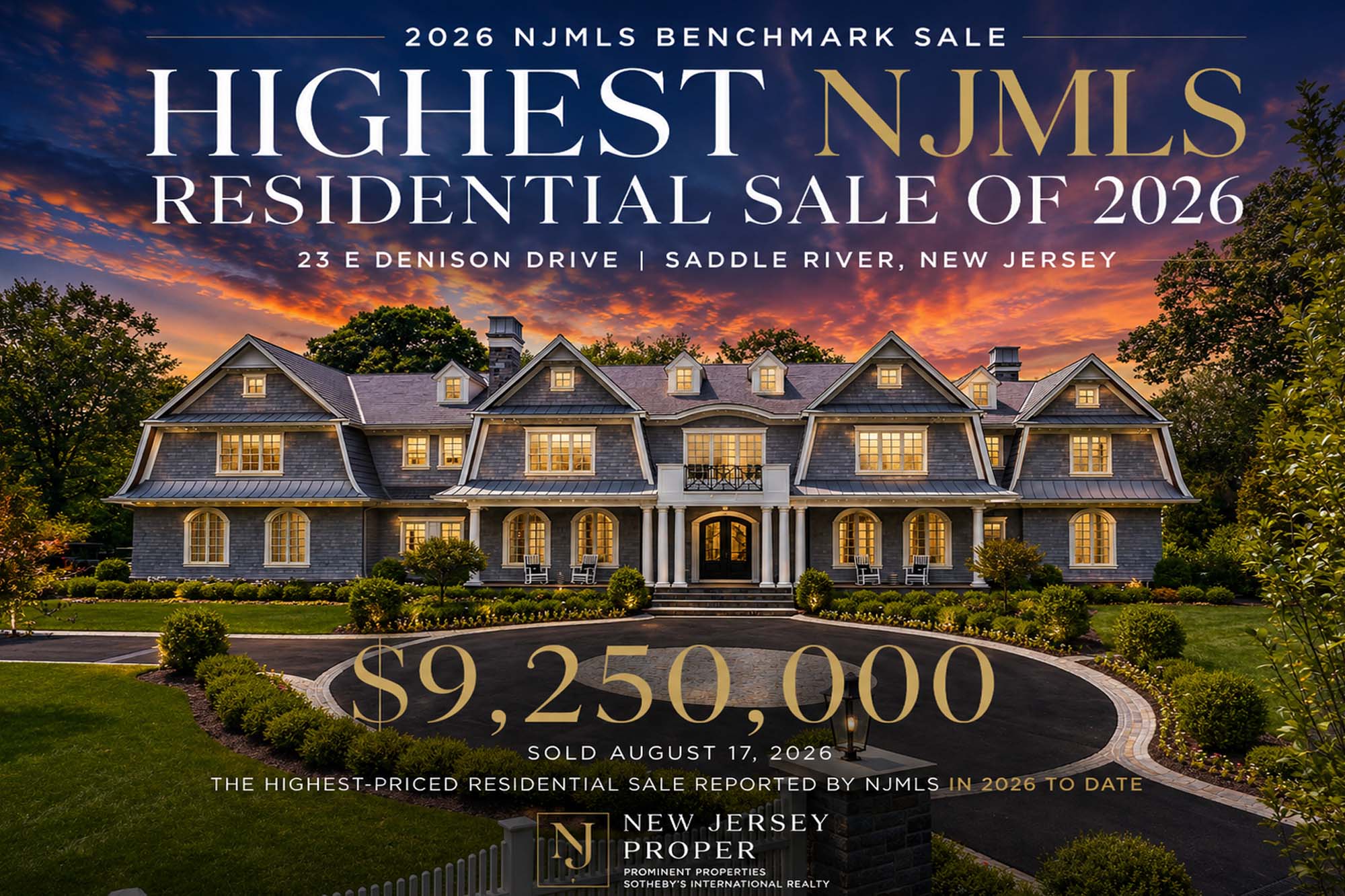
Five Highest-Priced NJMLS Residential Sale…
The $9.25 million closing of 23 E Denison Drive is the highest-priced qualifying NJMLS residential s…

The Northern New Jersey Luxury Price Ladde…
A million-dollar budget can produce very different results across Northern New Jersey. Here is how l…
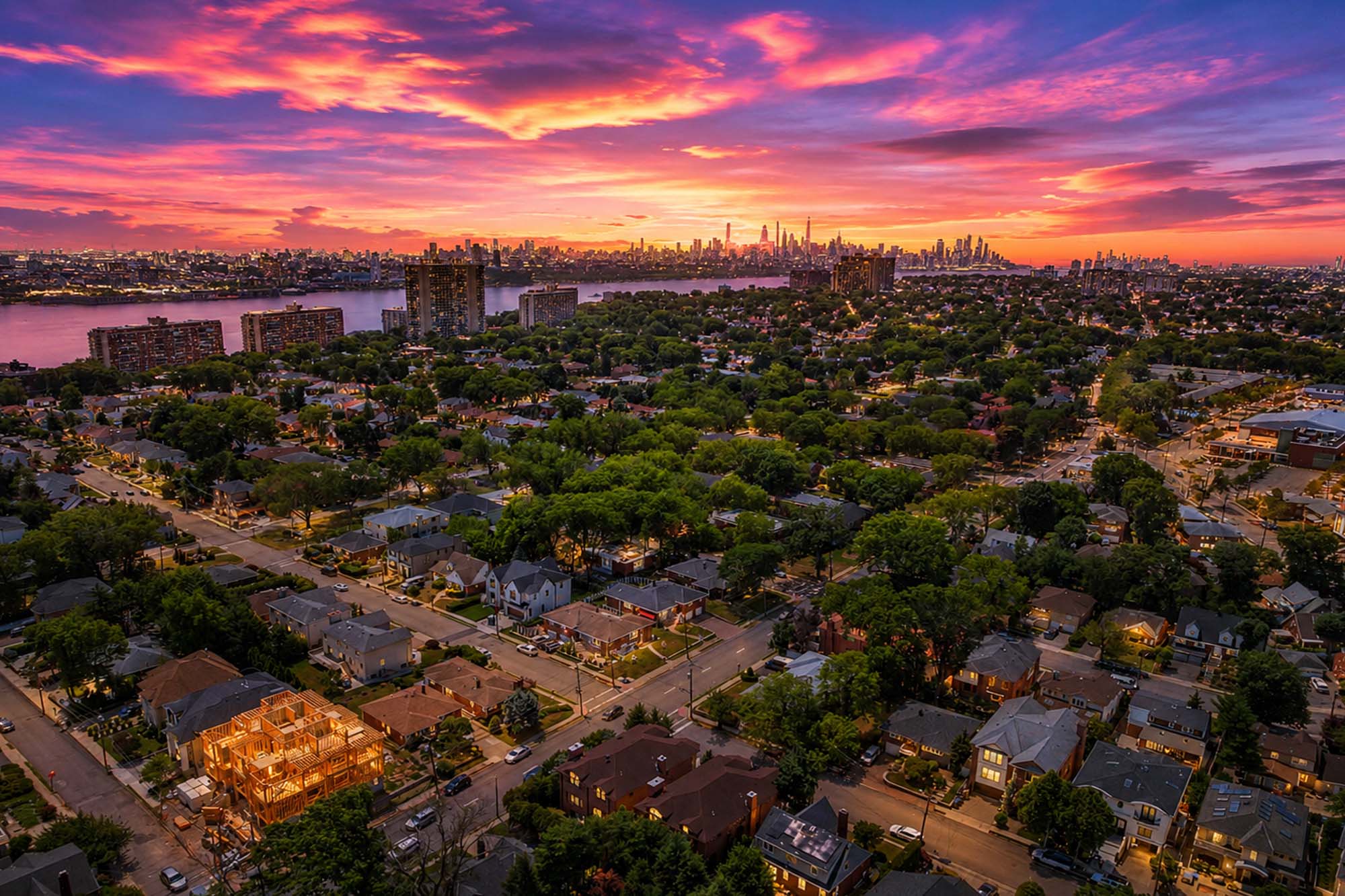
Why Bergen County Continues to Attract NYC…
Proximity to Manhattan is only part of the story. Bergen County offers space, architectural variety,…