


Area Highlights
A quick view of the most influential metrics in Upper Saddle River.
Upper Saddle River, NJ Housing Market (NJMLS) — 10-Year Snapshot (2016–2025)
Source: NJMLS Statistics Report • Town: Upper Saddle River (0263) • County: All Counties • Property type: All • Full-year periods (Jan 1–Dec 31)
2025 at a glance
- Closed sales: 137
- Median sale price: $1,335,000
- Average sale price: $1,579,775
- Sale-to-original list price: 100.83%
- Average days on market: 59
- Year-end inventory: 1.58 months (18 current actives)
- Success ratio: 70.3% (137 sold, 27 withdrawn, 31 expired)
2025 vs 2024
- Median sale price: $1,335,000 vs $1,231,788 (+8.4%)
- Average sale price: $1,579,775 vs $1,462,368 (+8.0%)
- Sale-to-original list price: 100.83% vs 101.44% (-0.61 pts)
- Average DOM: 59 vs 35 (+24 days)
- Closed sales: 137 vs 148 (-11)
- Success ratio: 70.3% vs 67.9% (+2.4 pts)
- Months inventory: 1.58 vs 1.46 (+0.12)
10-year trend (2016 → 2025)
- Median sale price: $870,000 → $1,335,000 (+53.4%)
- Average sale price: $970,538 → $1,579,775 (+62.8%)
- Average DOM: 77 → 59 (-18 days)
- Sale-to-original list price: 94.24% → 100.83% (+6.59 pts)
- Highest success ratio: 70.3% (2025)
- Inventory range (year-end): 1.15–2.10 months
| Year | Sold | New | Median Sold | Average Sold | Sale/OLP | Avg DOM | Withdrawn | Expired | Success Ratio | Current Actives | Months Inv. |
|---|---|---|---|---|---|---|---|---|---|---|---|
| 2016 | 113 | 315 | $870,000 | $970,538 | 94.24% | 77 | 59 | 129 | 37.5% | 18 | 1.91 |
| 2017 | 112 | 319 | $820,500 | $950,543 | 93.73% | 77 | 67 | 104 | 39.6% | 18 | 1.93 |
| 2018 | 125 | 337 | $830,000 | $935,760 | 93.44% | 76 | 69 | 110 | 41.1% | 18 | 1.73 |
| 2019 | 103 | 284 | $825,000 | $954,516 | 94.12% | 78 | 66 | 89 | 39.9% | 18 | 2.10 |
| 2020 | 174 | 357 | $817,550 | $973,430 | 96.59% | 70 | 56 | 79 | 56.3% | 18 | 1.24 |
| 2021 | 188 | 320 | $1,050,500 | $1,200,982 | 99.45% | 41 | 53 | 52 | 64.2% | 18 | 1.15 |
| 2022 | 170 | 240 | $1,069,328 | $1,259,463 | 101.39% | 39 | 34 | 47 | 67.7% | 18 | 1.27 |
| 2023 | 137 | 208 | $1,146,994 | $1,235,439 | 101.41% | 42 | 49 | 31 | 63.1% | 18 | 1.58 |
| 2024 | 148 | 241 | $1,231,788 | $1,462,368 | 101.44% | 35 | 46 | 24 | 67.9% | 18 | 1.46 |
| 2025 | 137 | 188 | $1,335,000 | $1,579,775 | 100.83% | 59 | 27 | 31 | 70.3% | 18 | 1.58 |
Success ratio = Sold ÷ (Sold + Withdrawn + Expired). Months inventory and current actives reflect the year-end snapshot shown in the NJMLS report.
Top 10 Most Expensive Single-Family Home Sales in Upper Saddle River, NJ (2000–2025)
Closed residential single-family sales in Upper Saddle River from 01/01/2000 through 12/31/2025,
ranked by sold price. Fields shown include address, MLS-recorded style, beds/baths, days on market, sold date, sold price,
and buyer origin (city/state).
| Rank | Address | Style | BR | FB | HB | DOM | Sold Date | Sold Price | Buyer City | Buyer State |
|---|---|---|---|---|---|---|---|---|---|---|
| 1 | 17 Harvey Lane | Colonial | 6 | 6 | 1 | 3 | $4,750,000 | Davies | FL | |
| 2 | 30 Yeoman Drive | Colonial | 7 | 8 | 2 | 14 | $4,700,000 | New Jersey | NJ | |
| 3 | 59 Eagle Rim Road | Colonial | 7 | 8 | 2 | 0 | $4,250,000 | Brooklyn | NY | |
| 4 | 21 Stone Ledge Road | Colonial | 6 | 7 | 1 | 8 | $4,000,000 | Upper Saddle River | NJ | |
| 5 | 8 Orchard | Colonial | 6 | 7 | 1 | 71 | $3,950,000 | NJ | NJ | |
| 6 | 52 Dimmig Road | Colonial | 6 | 7 | 2 | 102 | $3,700,000 | New York | NY | |
| 7 | 136 Fawnhill Road | Colonial | 6 | 7 | 1 | 2 | $3,600,000 | Duck | NC | |
| 8 | 56 Dimmig Road | Colonial | 5 | 5 | 1 | 9 | $3,570,000 | Old Tappan | NJ | |
| 9 | 24 Jan River Drive | — | 6 | 7 | 3 | 402 | $3,562,500 | Upper Saddle River | NJ | |
| 10 | 25 Stone Ledge Road | Colonial | 5 | 6 | 3 | 11 | $3,500,000 | Paramus | NJ |
Source: closed residential single-family sales from 01/01/2000–12/31/2025. Public display excludes MLS identifiers.
“Style” reflects the MLS-recorded property style; buyer origin reflects the buyer mailing city/state as recorded and may not represent current residence.
How to use this table
- Compare Upper Saddle River’s price ceiling across the last 25 years.
- See which home profiles reach the highest sold prices (style, beds/baths, time on market).
- Spot buyer-origin patterns (city/state) at the top end.
Schools In The Area
Living in Upper Saddle River: schools, nearby rail, parks, estate properties and parcel-level due diligence
A buyer-focused guide to Upper Saddle River’s local Pre-K–8 school district, Northern Highlands Regional High School, nearby Main–Bergen County rail stations, municipal parks and programs, library and historic resources, large-property ownership, permits, septic and well considerations, and address-specific buying decisions.
A predominantly residential borough where road position, school access, parcel systems and regional routes shape daily life
Upper Saddle River combines detached housing, civic and school facilities, municipal parks, historic road patterns and nearby regional transportation. It does not function like a rail-centered downtown market, so the buyer experience depends heavily on the exact address and complete weekly routine.
West Saddle River Road civic and school corridor
Borough Hall, the Upper Saddle River School District offices and the Reynolds, Bogert and Cavallini campuses are concentrated along West Saddle River Road. This creates a recognizable civic and school spine rather than a conventional commercial downtown.
Properties using this corridor can have practical access to schools and municipal services while experiencing school-day traffic, recreation activity, municipal operations and seasonal events.
Test: the actual morning, dismissal, evening-program and weekend route from the property.
Lake Street, Lions Park, library and museum
Lake Street connects Lions Park, the Upper Saddle River Library and the historic Hopper-Goetschius House Museum area. It is one of the borough’s most useful reference corridors for recreation, community programming and local history.
Proximity can improve access to fields, events, programs and library services while adding occasional activity, parking demand or field sound.
Test: event conditions, pedestrian route, park lighting, field schedule and the return trip after dark.
East Saddle River Road and historic landscape
East Saddle River Road retains parts of the borough’s older road pattern, mature landscape and historic building context. The Upper Saddle River Historical Society describes the borough’s transition from Dutch farming settlement to postwar suburb while preserving narrow roads, trees, brooks and historic homes.
An older appearance does not by itself establish designation, legal status, structural condition or renovation restrictions.
Verify: survey boundaries, historic status, road width, drainage, utilities, permits and future-work feasibility.
Route 17 edge and regional convenience
Upper Saddle River lies near Route 17, creating access toward Ramsey, Mahwah, Allendale, the Garden State Parkway, Interstate 287 and regional retail or employment areas. The municipal website also identifies the newer 1 Lake Street Sports Complex near this side of the borough.
Road convenience varies by the property’s driveway, local approach, direction of travel and peak-hour congestion.
Test: garage-to-Route-17 time in both directions, noise at the parcel and alternate routes during incidents or weather.
Northern and southern approaches
Upper Saddle River borders or connects closely with Ramsey, Allendale, Saddle River, Mahwah and Montvale-area routes. A home’s position within the borough can materially change the practical station, shopping district, school route and highway approach.
A short map distance can still involve limited turn options, school traffic, narrow roads or a longer evening return.
Compare: Allendale, Ramsey Route 17 and Ramsey Main Street station trips from the exact driveway.
Predominantly residential character
Upper Saddle River is primarily a residential market rather than a downtown-centered one. Buyers commonly choose it for detached homes, larger yards, privacy and access to nearby business districts rather than for a broad in-town restaurant and retail grid.
Daily errands often extend into Ramsey, Allendale, Mahwah, Woodcliff Lake, Saddle River, Franklin Lakes and Ridgewood.
Map: grocery, pharmacy, medical, fitness, childcare, dining, rail and weekend routes before selecting a location.
Brooks, ponds, slopes and wooded parcels
The borough’s historic descriptions, park system and public-works responsibilities reflect a landscape of brooks, ponds, drainage infrastructure, wooded lots and varied topography. These features can add privacy and visual interest while increasing parcel-level investigation.
A landscaped yard or nearby water feature does not establish drainage performance or buildable area.
Review: survey contours, flood mapping, wetlands, stormwater facilities, seepage pits, prior water entry, retaining walls and insurance.
The exact-address comparison
Upper Saddle River should be evaluated property by property. Lot dimensions, zoning, setbacks, legal improvements, utility systems, school traffic, road exposure, topography, drainage and station choice can change within a short distance.
The strongest comparison uses records and live route testing rather than a ZIP-code-level description.
Decision file: combine the survey, permit history, utility confirmation, school process, commute tests and ownership-cost estimate.
Location labels: Road corridors and park references are practical orientation points, not guaranteed neighborhood boundaries. Use the exact block, lot and street address for zoning, permits, utilities, flood, school and title research.
Large-property appeal comes with more systems, site work and records to evaluate
Upper Saddle River’s housing market includes established traditional homes, older properties, substantial renovations and newer construction. Lot size and presentation are only the starting point; legal use, utility systems, drainage, improvement approvals and long-term carrying cost determine practical ownership.
Established Colonials and custom traditional homes
A substantial portion of the market consists of detached Colonials and custom traditional residences built or expanded during different development periods. Floor plans, ceiling heights, bedroom placement, garage configuration and renovation quality vary materially.
Architectural labels should not replace review of approved plans, actual measurements, structural changes and mechanical systems.
Compare: main-level function, bedroom distribution, stair geometry, basement condition, garage access and outdoor circulation.
Ranches, split-levels, Cape forms and older residences
Older ranches, split-levels, Cape-influenced homes and earlier custom properties can provide renovation or expansion opportunities. They may also contain legacy electrical, plumbing, insulation, chimney, drainage, tank or environmental conditions.
A renovated appearance does not establish that prior work was permitted or that concealed systems were replaced.
Inspect: structure, roof, masonry, mechanical age, electrical service, sewer or septic components, water source and environmental conditions.
New construction and major renovations
Upper Saddle River includes newer construction and extensive rebuilds ranging from transitional homes to larger custom residences. Buyers should distinguish new work from renovated or expanded work and identify the approvals supporting each portion.
Warranty language, final certificates, as-built conditions and unresolved punch-list items require separate review.
Request: permit jacket, approved plans, inspection record, certificates, warranties, engineering approvals and final survey.
Estate amenities and accessory improvements
Larger properties may include pools, spas, outdoor kitchens, sport courts, generators, extensive lighting, cabanas, sheds, detached structures, gates, walls or complex drainage and irrigation systems.
Every amenity adds legal, physical, seasonal, insurance and operating questions.
Verify: permits, setbacks, barriers, electrical and gas work, equipment age, drainage, winterization and replacement cost.
Usable lot area matters more than headline acreage
A larger tax-lot figure does not establish a level yard, a conforming building envelope or room for an addition. Easements, setbacks, coverage, wetlands, steep areas, drainage features, tree conditions and existing improvements can reduce practical flexibility.
A scaled current survey is central to any future-work analysis.
Model: the intended addition, pool, court, garage or accessory structure before assigning value to expansion potential.
Septic, well and utility configuration
The Borough Board of Health administers septic-related matters and references the Private Well Testing Act for applicable real-estate transactions. Utility arrangements are property-specific; buyers should not assume that every home has the same water or wastewater service.
Capacity, location, maintenance, testing and replacement feasibility can affect both use and renovation plans.
Confirm: water source, wastewater system, records, test results, service responsibility and required transaction procedures.
Historic character and older stone-house context
The Hopper-Goetschius House Museum and other older buildings reflect the borough’s Dutch sandstone and agricultural history. Some private homes may have historical interest, older construction methods or later additions.
Historical interest is not the same as municipal designation, title restriction or approval status.
Research: historic records, title, permits, materials, foundation, moisture, prior alterations and any applicable review process.
Carrying cost and property management
Large homes and grounds can require substantial spending on heating and cooling, roofing, generators, drainage, tree work, landscaping, irrigation, pools, snow removal, private systems and exterior maintenance.
Taxes alone do not describe the full annual ownership cost.
Build: a five-year operating and capital plan using actual bills, service records, equipment ages and insurance quotes.
Separate visual appeal from legal and physical utility
- Legal bedroom and bathroom count
- Approved finished square footage
- Current survey and title rights
- Zoning and building envelope
- Water and wastewater systems
- Drainage and grading design
- Permit and inspection history
- Pool and accessory approvals
- Mechanical and generator age
- Roof, masonry and exterior envelope
- Landscape and tree obligations
- Insurance and annual operating cost
A local Pre-K–8 sequence followed by Northern Highlands Regional High School
The present pathway is straightforward at the town level, but buyers still need to verify registration documents, program eligibility, school-year timing, transportation and the daily route. School information should remain neutral and sourced directly from the districts.
Local Pre-K–8 district pathway
The Upper Saddle River School District identifies three schools: Reynolds Elementary, Bogert Elementary and Cavallini Middle School. The district profile currently describes a Pre-K–8 sequence organized by grade rather than multiple neighborhood elementary zones.
Programs, enrollment procedures, calendars and capacity can change by school year.
Robert D. Reynolds Elementary School
Current district information identifies Reynolds as the early-grade campus, including preschool programming and kindergarten through grade 2. Families should confirm the intended program, eligibility, schedule and registration path for the applicable year.
Preschool access should not be assumed from a property purchase alone.
Edith A. Bogert Elementary School
Bogert currently serves grades 3 through 5. The campus sits within the West Saddle River Road school cluster near Reynolds, recreation facilities and municipal services.
Arrival, dismissal, after-school activities and visitor access use specific traffic procedures.
Emil A. Cavallini Middle School
Cavallini currently serves grades 6 through 8. Families should review the school calendar, activities, transportation and transition process directly with the district.
Middle-school programming and schedules should be confirmed for the student’s entry year.
Northern Highlands Regional High School
Upper Saddle River students continue to Northern Highlands Regional High School in Allendale for grades 9 through 12 under the current public-school pathway. Northern Highlands publishes its own registration, curriculum, activities, athletics, calendar and transportation information.
The high-school commute and activity schedule should be tested separately from the local K–8 campus route.
Registration and residency documents
The district currently directs families to prepare required documents before completing Genesis online registration. Published guidance calls for multiple proofs of residency, including a deed or lease, a utility bill and additional documentation.
Requirements can differ by homeowner, renter, custody arrangement, grade and program.
Confirm: the current checklist and school contact before a closing date or enrollment deadline.
Kindergarten and preschool timing
Kindergarten eligibility, preschool formats, screening, capacity, tuition if applicable and registration windows are year-specific. A buyer should use the district’s current announcements rather than an older listing, social post or prior-year calendar.
A child’s age and residency date can affect the correct process.
Verify: age cutoff, required records, program eligibility, schedule and notification timing directly with the district.
School-campus traffic and daily routing
Reynolds, Bogert and Cavallini are concentrated along West Saddle River Road, and the district publishes specific drop-off, pickup, visitor-parking and traffic-flow procedures. A nearby address does not eliminate car, bus or activity traffic.
The practical route changes by campus, time and entry point.
Test: morning, dismissal and evening-activity conditions from the property.
ACE after-care and recreation coordination
The district publishes ACE after-care information and procedures for coordination with certain Upper Saddle River recreation programs. Availability, dates, grade eligibility, transportation and fees should be confirmed for the intended school year.
After-school logistics can materially change the daily household route.
Calendars, programs and district decisions
School calendars, early dismissals, professional-development days, program offerings, enrollment practices and transportation details are controlled by the responsible districts. They should not be treated as permanent property attributes.
Official district pages and direct confirmation are the appropriate sources.
Complete the enrollment and routine check before relying on listing language
Upper Saddle River has a clear current grade sequence, but eligibility, enrollment, programs, transportation and calendars remain district-controlled.
- 01
Confirm the current grade pathwayReynolds, Bogert, Cavallini and Northern Highlands for the intended entry year.
- 02
Review registration documentsResidency, identity, custody, health, prior-school and program records.
- 03
Test the campus routeDrop-off, pickup, bus, after-care and evening-activity conditions from the property.
- 04
Use current district sourcesDo not rely on rankings, listing copy, prior-year calendars or seller assumptions.
Nearby rail and regional roads require an address-specific station and route strategy
Upper Saddle River’s transportation profile is based on Route 17 access and nearby stations rather than an in-town rail stop. Parking rules, train patterns, transfers, coach service and road conditions change, so buyers should test the full trip during the hours that matter.
No passenger-rail station inside the borough
Upper Saddle River does not have an in-town NJ TRANSIT rail station. Buyers commonly compare nearby stations rather than treating one option as universal.
The practical choice depends on the property, parking access, train pattern, destination and return schedule.
Compare: Allendale, Ramsey Route 17 and Ramsey Main Street from the exact driveway.
Allendale Station
NJ TRANSIT lists Allendale Station on Main–Bergen County service. Parking is municipality-controlled or shared by lot, and published resident, nonresident, daily and permit conditions differ among lots.
Parking information and availability can change without notice.
Ramsey Route 17 Station
Ramsey Route 17 is an accessible Main–Bergen County station with a large daily and permit parking facility. It can be a practical choice for households prioritizing parking capacity and Route 17 access.
Rates, operator rules, garage conditions and train service should be checked before relying on it.
Ramsey Main Street Station
Ramsey Main Street is another nearby Main–Bergen County station. Its downtown location and parking arrangements create a different access pattern from the Route 17 facility.
A station that appears closer on a map may not be the best door-to-door choice.
Train patterns and transfers vary
Main–Bergen County trips can involve Hoboken, Secaucus Junction and onward connections depending on the train and destination. Not every departure has the same transfer, platform, express pattern or late-evening return.
Use a current trip planner for the actual day and time.
Test: weekday, weekend, late return, weather disruption and backup route.
Private bus and commuter-coach options require live verification
Private or commuter-coach service may operate from Route 17, Lake Street or nearby park-and-ride points, but operators, stops, schedules and ticketing can change. A historic route reference is not enough for a purchase decision.
Confirm the current operator and exact boarding location before relying on bus service.
Record: stop side, parking, ticket method, last return, holiday schedule and service-alert channel.
Driving corridors and regional roads
Route 17 is the principal nearby regional corridor, with connections toward the Garden State Parkway, Interstate 287, Route 4 and New York crossings. Local approaches differ by side of the borough and direction of travel.
School traffic, incidents, construction, snow and peak-hour queues can materially change a short route.
Test: normal departure and return windows plus one realistic alternate route.
Build a complete door-to-door commute model
A useful commute comparison includes the driveway, local roads, parking or drop-off, platform wait, transfers, destination walk, late service and a disruption plan. It should be repeated for each finalist property.
Fixed commute-time claims are not reliable for this market.
Compare: best case, ordinary case and disrupted case rather than a single advertised number.
A residential borough supported by several nearby downtowns and regional service corridors
Upper Saddle River’s appeal is not based on an extensive in-town commercial district. Buyers should map the exact relationship to Ramsey, Allendale, Mahwah, Woodcliff Lake, Ridgewood, Franklin Lakes and the Route 17 corridor while separating daily needs from occasional destinations.
No traditional in-town downtown
Upper Saddle River is primarily residential and does not have a broad walkable central business district comparable with Ridgewood, Ramsey or Allendale. Some local services sit near Lake Street and Route 17, but many errands extend into neighboring towns.
This can support a quieter residential pattern while making route planning more important.
Map: the household’s real weekly needs rather than assuming a generic suburban radius.
Ramsey Main Street
Ramsey’s downtown is a common nearby option for restaurants, cafés, services, the Main Street rail station and community events. The drive differs by property location, traffic period and parking demand.
Business ownership, hours and concepts change over time.
Test: dinner, weekend and station-adjacent parking conditions.
Allendale center
Allendale provides another nearby small-downtown pattern with dining, services and rail access. It can be convenient for households using Allendale Station or traveling along West Allendale Avenue and Franklin Turnpike.
The best route may be different during school traffic or rail-commuter periods.
Compare: grocery, dining, station, pharmacy and return-trip convenience from the property.
Route 17, Ramsey and Mahwah services
The Route 17 corridor expands access to groceries, fitness, medical services, restaurants, home-improvement needs and regional shopping in Ramsey and Mahwah. It also brings traffic, turn restrictions and destination-specific access patterns.
A business can be geographically close but inconvenient from the wrong direction of travel.
Test: both northbound and southbound approaches and the evening return.
Tice’s Corner and Woodcliff Lake retail
Tice’s Corner in Woodcliff Lake is one nearby specialty-shopping destination. It illustrates how Upper Saddle River households often combine several surrounding commercial areas rather than relying on one downtown.
Tenant mix, hours and operating policies should be confirmed directly.
Ridgewood, Franklin Lakes and broader dining radius
For a wider restaurant, specialty-retail or service selection, households may also use Ridgewood, Franklin Lakes and other Bergen County centers. Travel time depends more on route and hour than county distance alone.
A buyer should distinguish everyday convenience from occasional destination dining.
Compare: weekday errands, Friday dinner, weekend activities and late-evening return.
Healthcare, childcare and professional services
A complete location review should include primary care, urgent care, hospital preferences, dental and specialist appointments, childcare, houses of worship, pet care, professional offices and home-service providers.
These destinations may point the household toward different sides of the borough.
Build: a shared map using actual providers and recurring appointments.
Delivery, service and property-access conditions
Large homes often rely on landscapers, pool service, oil or propane delivery where applicable, waste pickup, contractors and seasonal equipment. Narrow drives, gates, slopes, turnaround space and snow can affect service access.
Daily convenience includes how the property itself functions for deliveries and maintenance.
Observe: mail, package, waste, contractor, emergency and winter-access conditions.
Map errands and service access, not only restaurants
Upper Saddle River’s residential format makes the complete route more useful than a list of nearby businesses. Test the actual household pattern from each finalist property.
- A
Everyday essentialsGrocery, pharmacy, fuel or charging, coffee, fitness and childcare.
- B
Commuter combinationStation or bus stop, parking, coffee, evening pickup and return route.
- C
Property servicesLandscaping, pool, generator, septic, well, snow and delivery access.
- D
Business verificationCurrent operator, hours, reservation, accessibility and route conditions.
Municipal parks, school fields, a newer sports complex and seasonal recreation
Upper Saddle River Recreation coordinates programs and special events and identifies Lions Park, Hess Park, Liberty Pond Park and the school fields as maintained facilities. Programs, reservations, memberships, fields and schedules change, so current municipal information should control.
Lions Park
The Borough identifies Lions Park as one of its maintained municipal parks. It is associated with recreation, community gatherings and recurring Upper Saddle River events.
Facilities, field assignments, reservations, parking and operating rules should be checked through Recreation.
Hess Park
Hess Park is another named municipal park maintained with support from the Recreation Department and Public Works. Buyers near any active park should consider both access and event or practice conditions.
Current amenities and permitted uses should be confirmed rather than inferred from third-party maps.
Liberty Pond Park
Liberty Pond Park adds a pond and passive-open-space reference within the borough’s recreation system. Water, landscaping, wildlife and seasonal conditions can change how the area is used.
Nearby property review should remain parcel-specific for drainage, insects, vegetation and insurance.
Verify: current public access, permitted activities and any seasonal restrictions.
School fields and tennis area
The Borough states that Recreation and Public Works maintain fields at Bogert, Reynolds and Cavallini. District and recreation pages also reference tennis programming near Reynolds.
School and recreation use can create changing schedules, lighting, traffic and parking.
Check: facility calendar, resident eligibility, registration, court rules and event conditions.
1 Lake Street Sports Complex
The municipal website identifies a newer lighted turf sports complex at 1 Lake Street, with project and community updates published by the Borough. Operations and completion details should be reviewed through current notices.
Nearby buyers should evaluate both access and field-light, traffic, event and parking conditions.
Confirm: current facilities, hours, scheduling and public-use rules.
Tennis and pickleball programs
Current Recreation materials include adult and student tennis and pickleball programs, along with court rules and reservation or membership information. Offerings are seasonal and capacity can change.
Do not assume that a prior-year program will repeat in the same format.
Youth and adult sports organizations
The Recreation page coordinates or links to baseball, softball, basketball, soccer, lacrosse, hockey, wrestling and other community sports organizations. Eligibility, tryouts, league structure, travel, fees and facilities vary.
Families should map activity locations in addition to school locations.
Plan: practice nights, tournament travel, pickup logistics and seasonal overlap.
Passive use and nearby regional outdoor options
Walking, informal park use, pond access, tree-lined roads and nearby regional parks can support an outdoor routine, but sidewalks, shoulders, crossings and trail conditions vary. A scenic route is not automatically a safe or practical pedestrian route.
Test the intended walk, run or bicycle path in person and review current rules.
Evaluate: surface, shoulder, grade, crossings, lighting, weather and destination access.
Recurring civic, recreation, library, school and history programs with changing dates
Upper Saddle River has an active calendar, but no single static event list stays reliable. Use the Borough, Recreation, school, library and Historical Society sources for the intended date, registration rules, parking and weather decisions.
Upper Saddle River Day
USR Day is a recurring community event published through Borough news and calendar channels and associated with Lions Park. Date, hours, vendors, activities, parking and weather procedures are established for each edition.
Nearby homes may experience temporary activity or traffic changes.
Memorial Day and civic observances
The Borough calendar has published Memorial Day programming and other civic observances. Routes, assembly points, road impacts and schedules vary by year.
Use the current municipal calendar rather than carrying forward an older event date.
Recreation events and seasonal activities
Current Recreation materials include changing items such as a fishing derby, 5K, cleanup day, sports registrations and seasonal tennis or pickleball. These examples describe the program range, not a guaranteed annual calendar.
Registration, residency rules, capacity and weather policies should be checked for each event.
Hopper-Goetschius House programs
The Upper Saddle River Historical Society operates the Hopper-Goetschius House Museum and publishes tours, demonstrations, summer openings, history programs and seasonal events. Hours and dates vary.
The museum is a local-history resource as well as an event site.
Library programs
The Upper Saddle River Library publishes programs for children, teens and adults, including classes, book groups, reading programs and changing special events. Cardholder eligibility and registration rules differ by program.
Study and meeting spaces use separate reservation policies.
School concerts, athletics and calendars
Upper Saddle River Schools and Northern Highlands publish their own calendars, performances, athletics, parent events, meetings and school-community programs. These schedules can affect household logistics and nearby traffic.
Use both district calendars when planning a school-year routine.
Resident clubs and community organizations
The Borough lists resident, garden, historical, recreation and volunteer organizations that may sponsor social, civic, cultural or service activities. Membership, eligibility, dues and schedules are controlled by each group.
A club listing does not guarantee current availability or admission.
Use live calendars before every event
Municipal, school, library, historical and recreation calendars are separate. Events can move, sell out, require registration, change parking arrangements or be canceled for weather.
Nearby residents should also review temporary road and field notices.
Check: official calendar, organizer page, alert system and day-of notice.
Use the correct department for property records, utilities, permits, health, recreation and emergency information
Upper Saddle River services are distributed among Borough departments, school districts, the library, public-safety organizations and community institutions. A property or household question is more reliable when directed to the office that controls it.
Upper Saddle River Library
The library at 245 Lake Street provides borrowing, digital resources, programs, study rooms and community meeting resources. Eligibility, hours, reservations and registration rules should be checked on the current site.
Borough Hall and department directory
Borough Hall connects residents with administration, clerk, finance, tax, building, zoning, planning, engineering, health, public works, recreation and public-safety contacts.
Building, zoning and engineering
Projects can require construction, zoning, engineering, soil-movement or other prior approvals. The Zoning Department states that an up-to-date scaled survey is required for projects.
Board of Health
The Board of Health reviews septic and health matters and publishes well-testing information for applicable real-estate transactions. Property-specific records should be requested directly.
Public Works and recycling
Public Works maintains roads, drainage, municipal grounds, parks, fields, signage, snow operations and the recycling center. Collection and depot schedules can change by season and weather.
Police, fire and emergency resources
Use official police, fire, ambulance, OEM and CERT resources for public-safety information. The Police Department states that home and business alarm registration is mandatory.
Alerts and notifications
The Borough uses mass notification and Notify Me systems for emergency alerts, general news, agendas and calendar information. Residents should register their preferred contact methods.
Property records, assessor and OPRA
The assessor, tax collector, clerk, building, zoning, engineering, health and fire offices hold different portions of a property record. Request by exact address, block and lot.
Historical Society and museum
The Upper Saddle River Historical Society operates the Hopper-Goetschius House Museum and provides local-history, architectural and genealogical context. Current visiting hours are seasonal.
The value of a large property depends on legal use, systems, site performance and future flexibility
Upper Saddle River buyers should assemble a parcel-specific record before assigning value to acreage, finished space, estate amenities or expansion potential. The most important questions often sit below the visual presentation: zoning, survey, permits, private systems, drainage, engineering and carrying cost.
Zoning district and bulk standards
Upper Saddle River has multiple zoning provisions and project-review pathways. Do not apply a universal lot-size, setback, coverage or use rule to every property.
Confirm the parcel’s current zone, lot dimensions, setbacks, building and impervious coverage, height, accessory rules and any legal nonconformity.
Obtain: zoning map or confirmation, code provisions, current survey and prior land-use decisions.
Survey, title, easements and boundaries
A current scaled survey should identify boundaries, improvements, encroachments, easements, rights of way, walls, fences, pools, accessory structures and visible drainage features. Title review addresses recorded rights and restrictions.
Tax maps and online aerials are not boundary surveys.
Compare: survey, title commitment, deed, tax map and physical occupation of the lot.
Permit, inspection and certificate history
Request construction, zoning, engineering, health and fire records for additions, finished space, bedrooms, bathrooms, pools, generators, decks, walls, sheds and other work. Identify open permits, failed inspections, violations and work without a clear approval trail.
The listing description does not legalize an improvement.
Reconcile: municipal records with the home, survey, floor plan, tax record and seller disclosures.
Septic system condition and capacity
For a property using an individual septic system, review design, permits, location, age, pumping and repair history, inspection findings and relationship to bedrooms, additions, pools and wells.
A system that functions today may still limit future work or require capital planning.
Engage: qualified septic and engineering professionals and confirm Borough or health requirements.
Well water and water service
For a property with a private well, confirm the well location, construction, yield, treatment equipment, testing history and transaction testing requirements. The Board of Health references New Jersey’s Private Well Testing Act for applicable sales.
For other properties, verify the exact public or private water arrangement and service responsibility.
Do not assume: that a neighboring home has the same water source or service-line configuration.
Drainage, flood, stormwater and seepage systems
Review FEMA and local information, site elevations, prior water entry, grading, swales, basins, seepage pits, sump pumps, discharge points, wetlands and downstream conditions. Public Works maintains storm drainage, but private-site systems remain property-specific.
A dry inspection day does not establish performance during a major storm.
Request: drainage plans, engineering approvals, repair history, insurance information and seller documentation.
Soil movement, grading, walls and driveway
Large or sloped parcels can require careful analysis of soil movement, retaining walls, driveway grade, turnaround space, snow management and emergency access. Renovation or pool work may require engineering review before construction review.
Landscape maturity can conceal grade changes or aging wall conditions.
Inspect: wall structure and drainage, pavement, slopes, sight lines, gate operation and winter access.
Pools, generators and accessory structures
The Borough’s prior-approval guidance identifies projects such as pools, generators, air-conditioning equipment, fences, decks, sheds, walls and other accessory work as potentially requiring zoning, engineering or construction review.
Location, screening, setbacks, barriers and equipment connections matter.
Verify: approvals, final inspections, barrier compliance, equipment age, fuel source, maintenance and insurance.
Historic status and older construction
Research whether a property is merely old, historically documented, subject to a recorded restriction or affected by any local review. Older homes may also have sandstone, fieldstone, timber, masonry or later additions requiring specialized inspection.
Historic appearance alone does not answer regulatory or physical questions.
Separate: history, designation, title restrictions, permit history and construction condition.
Environmental and older-house systems
Depending on age and history, review underground storage tanks, radon, lead-based paint, asbestos-containing materials, mold or moisture, abandoned wells, prior septic components, fuel systems and contaminated soil risks.
Scope should be set with counsel, inspectors and environmental professionals.
Document: testing, remediation, closure records, warranties and ongoing monitoring requirements.
Road, school, park and sports-complex exposure
Visit at school arrival and dismissal, recreation evenings, weekend events, peak traffic and after dark. Review field lights, whistles, public-address sound, parking overflow, deliveries, maintenance operations and road noise.
Proximity can be either an amenity or an ownership tradeoff depending on the household.
Observe: from inside, yard, bedroom areas and driveway—not only at the curb.
Trees, landscape and outdoor infrastructure
Mature landscaping can require arborist review, irrigation maintenance, drainage coordination, deer or wildlife management, fence work and replacement planning. Large lawns and wooded areas can create significant recurring cost.
Confirm any municipal approvals required before removal or major site work.
Budget: tree care, lawn, irrigation, lighting, gates, pest control, snow and storm cleanup.
Insurance, taxes and operating cost
Obtain property-specific insurance quotes early, especially for large homes, pools, generators, older construction, private systems, flood exposure or extensive outbuildings. Review current taxes and likely reassessment effects with qualified professionals.
A seller’s historical premium is not a binding quote for the buyer.
Model: annual utilities, maintenance contracts, reserves and five-year capital projects.
Future-work feasibility
Before valuing a planned addition, pool, sport court, garage, accessory structure or major grading project, have professionals test zoning, survey, coverage, septic or sewer capacity, well setbacks, drainage, engineering, access and permit requirements.
Concept renderings are not approvals.
Prepare: a written feasibility memorandum tied to the exact survey and intended scope.
Rental, association or shared obligations if applicable
For any property with an association, shared road, private easement, rental use or other nonstandard arrangement, review governing documents, fees, reserves, insurance, maintenance allocations, leasing restrictions and municipal requirements.
These rights and obligations may not appear in ordinary marketing copy.
Review: title, recorded agreements, budgets, minutes, insurance and current rules with counsel.
Closing and post-closing compliance
Confirm current smoke and carbon-monoxide compliance, alarm registration, open permit closure, required testing, municipal payments, utility transfers, septic or well documentation and any certificate process applicable to the transaction.
Requirements and lead times can change.
Create: a responsibility matrix showing seller, buyer, attorney, inspector and municipal tasks before closing.
Request these before relying on the property description
- Current tax record and block / lot
- Survey, deed and title commitment
- Construction permit history
- Approved plans and inspections
- Zoning and planning decisions
- Engineering and drainage records
- Health, septic and well records
- Open permits or violations
- Fire and closing-compliance file
- Legal bedroom and bath count
- Pool and accessory approvals
- Historic research if relevant
- Environmental and tank records
- Insurance and utility history
- Service contracts and warranties
- Future-work feasibility memo
Use primary sources for changing school, transportation, permit, health and program information
These links reduce the risk of stale information. Buyers should still confirm the exact property, student, route, project, utility, facility and closing requirement with the responsible organization.
Continue the northwest Bergen County search
Compare the property, school routine, station strategy and complete ownership profile
New Jersey Proper can help buyers evaluate Upper Saddle River inventory across established homes, renovated properties, newer construction and larger estate parcels while coordinating the address-specific questions that affect legal use, systems, site performance, future work and value.
Direct answers to common Upper Saddle River questions
The answers remain visible in the page’s HTML for accessibility and machine comprehension. Time-sensitive details should still be confirmed through the linked official sources.
Where is Upper Saddle River, New Jersey?
What ZIP code is used in Upper Saddle River?
Is Upper Saddle River a town or a borough?
Does Upper Saddle River have a traditional downtown?
What types of homes are found in Upper Saddle River?
Are all Upper Saddle River lots very large?
Does acreage guarantee room for an addition or pool?
Which public schools serve Upper Saddle River through eighth grade?
Which grades are at Reynolds Elementary School?
Which grades are at Bogert Elementary School?
Which grades are at Cavallini Middle School?
Which public high school serves Upper Saddle River?
Does buying a home guarantee school admission or a specific program?
What documents are required for Upper Saddle River school registration?
How should families verify kindergarten eligibility?
Is preschool automatically available to every resident child?
Does the district offer after-care?
Are the local schools close together?
How should buyers test school traffic?
Does Upper Saddle River have an NJ TRANSIT rail station?
Which nearby station is best for Upper Saddle River?
What rail line serves Allendale and Ramsey?
How does parking work at Allendale Station?
What is different about Ramsey Route 17 Station?
Can trains reach New York Penn Station?
Are private commuter buses available?
How should a buyer test the commute?
Which major roads are near Upper Saddle River?
Where do Upper Saddle River residents shop and dine?
Does Upper Saddle River have municipal parks?
What is Lions Park?
What is Liberty Pond Park?
What is the 1 Lake Street Sports Complex?
Does Upper Saddle River offer tennis and pickleball?
What organized sports are available?
What is Upper Saddle River Day?
Does Upper Saddle River have a public library?
Can library study rooms be reserved?
What is the Hopper-Goetschius House Museum?
Does every older home have historic restrictions?
Do Upper Saddle River homes use septic systems?
Do Upper Saddle River homes have private wells?
Can a buyer assume public water or public sewer?
Why is a current survey important in Upper Saddle River?
What projects may require prior municipal approvals?
How long does a permit review take?
Why should buyers request permit records?
What drainage issues should be researched?
What should buyers know about sloped or wooded lots?
What should be verified for a pool?
What should be verified for a generator?
Does Upper Saddle River require alarm registration?
Where can residents find garbage and recycling information?
What should buyers inspect in an older home?
How should buyers estimate ownership cost?
Can a buyer rely on seller utility or insurance costs?
What municipal records should a buyer request?
Which nearby towns should Upper Saddle River buyers compare?
Where can buyers find current Upper Saddle River homes for sale?
All municipal, school, transportation, parking, business, recreation, event, utility, septic, well, property-record and closing information is subject to change. School residency and registration do not guarantee a specific program or placement. Buyers should independently verify all material property facts, legal use, permits, plans, survey matters, water and wastewater systems, flood and drainage conditions, historic status, insurance, taxes, title rights and future-work feasibility with the responsible public agencies and qualified professionals.
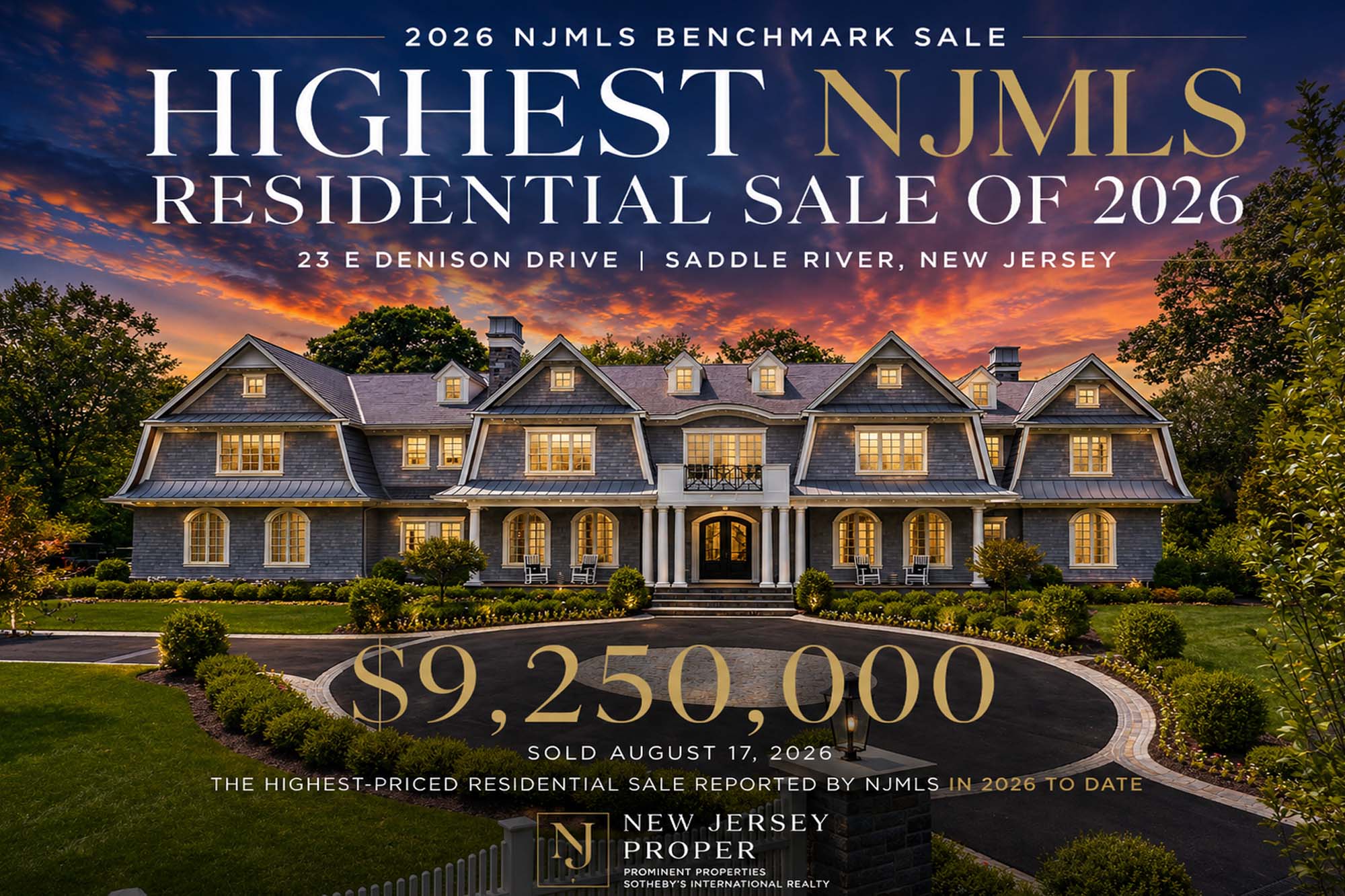
Five Highest-Priced NJMLS Residential Sale…
The $9.25 million closing of 23 E Denison Drive is the highest-priced qualifying NJMLS residential s…

The Northern New Jersey Luxury Price Ladde…
A million-dollar budget can produce very different results across Northern New Jersey. Here is how l…
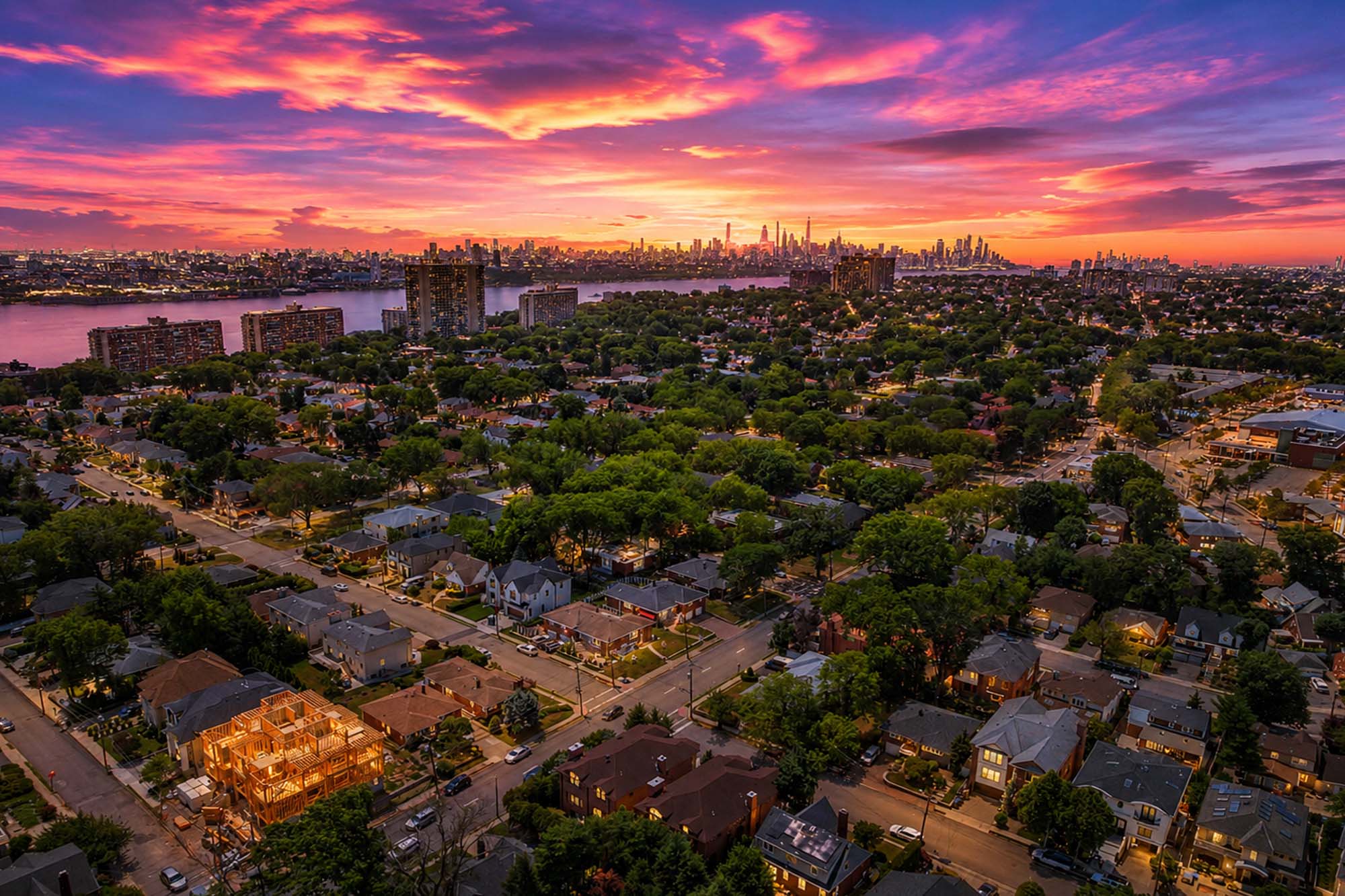
Why Bergen County Continues to Attract NYC…
Proximity to Manhattan is only part of the story. Bergen County offers space, architectural variety,…